The brand gnuhr (pronounced with a silent “g”) derives its name from the Arabic word “nur,” meaning “light.” It’s an apt moniker—a play on founder Nur Abbas’s first name and a nod at the “ultralight” designs the brand produces. Building on Abbas’s extensive experience working for high-end fashion brands such as Maison Margiela and Louis Vuitton, as well as activewear brands like Nike and Yeezy, gnuhr sits at the crossroads of high-end functionality and cutting-edge design.
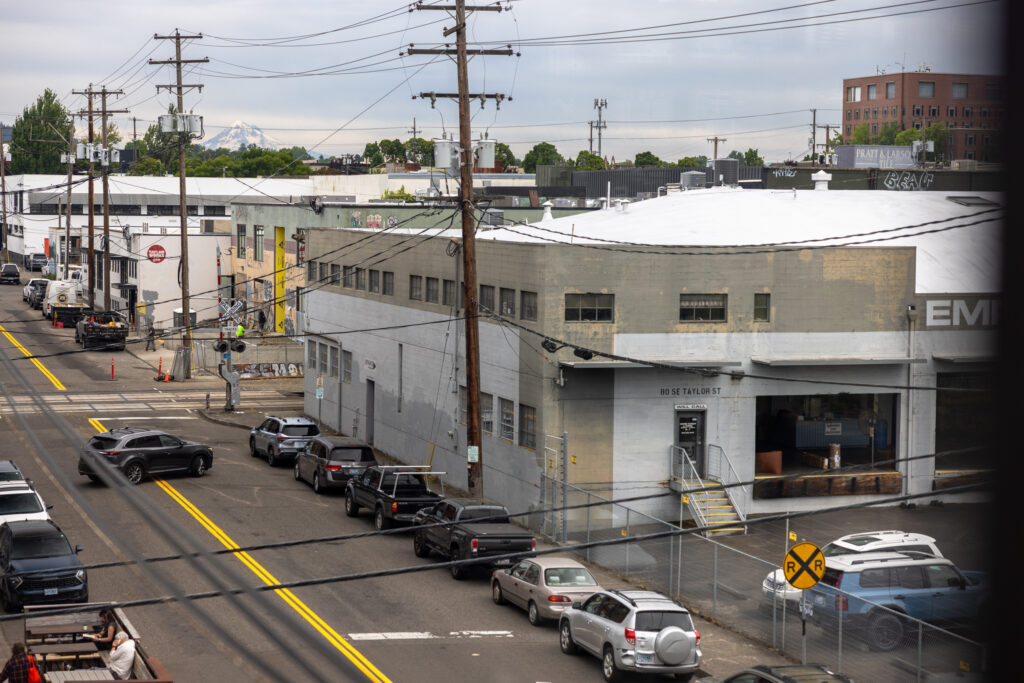
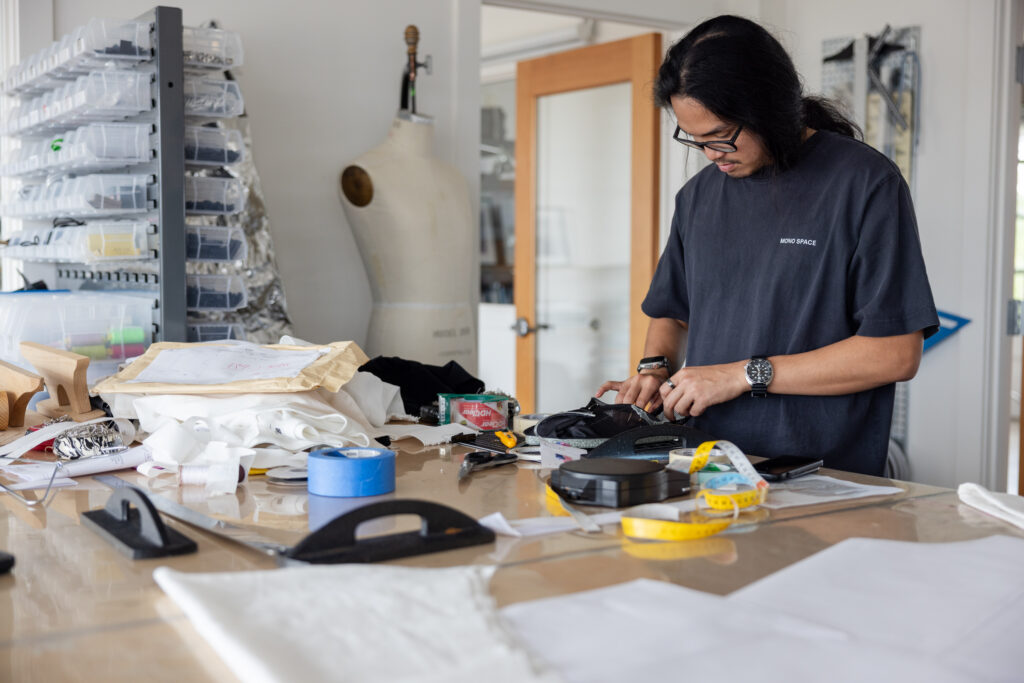
We met with Abbas at gnuhr Studio, a light-filled space in the Eastbank Commerce Center.
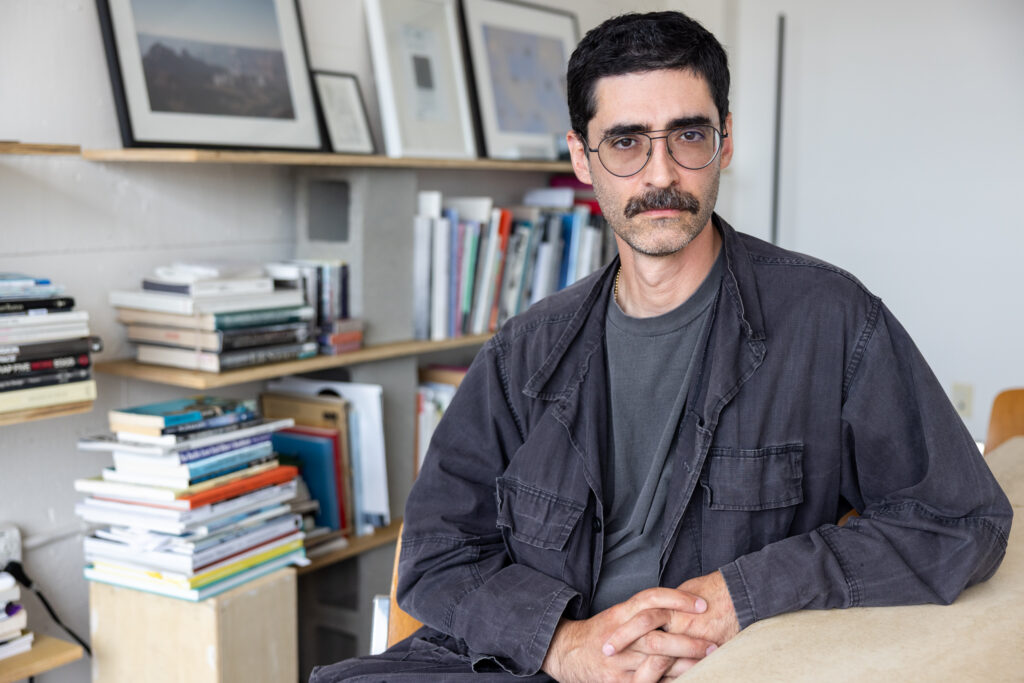
Q: Please introduce yourself and tell us where we find you today.
Nur Abbas: My name is Nur Abbas, and this is gnuhr Studio. There are two main parts of the company: a design consultancy and a house brand. We launched the brand about two and a half years ago.
Q: And how do you describe yourself? Founder? Owner?
NA: I describe myself simply as a designer. I’m someone that’s looking to make things, to find new opportunities to make things better, to solve a problem. In the studio, we think a lot about not just how we can be creative about the product, but also how we can be creative with the processes; how we can refine the way we design as well as what we’re designing.
Q: Tell us about gnuhr the brand.
NA: The brand, in very simple terms, is ultralight outdoor gear. We’re generally focused on apparel, but the idea is to create pieces for an ultralight backpacking kit. That gives us a certain set of boundaries but also a fairly broad scope in terms of products we can try out.
Q: How did the idea for the brand first coalesce?
NA: One of my main interests is the outdoors: backpacking and hiking. That definitely catalyzed during the pandemic and gave me a chance to focus more on making gear for myself. Because of my background in the fashion industry, I was able to take it a little bit further in terms of design and production. I pushed the boundaries of what I could do. I realized that maybe I had a few products that had more potential than just as gear that I’d take on a trip, myself. So the brand came out of that.
Q: What need or gap in the market do you see gnuhr filling for its customer base?
NA: Whether for everyday use or travel, having ultralight gear that’s durable, comfortable, and performs well is a game changer. Obviously you need that kind of gear when you’re on the trail. But if you design the gear the right way, then it can also translate into the rest of your life. You can get extended use out of an item, whether it’s a piece of clothing or a piece of gear. Instead of it being something you use a few days every now and again, you get to use it all the time and have a deeper relationship with that piece.
Q: How does that approach translate into your actual design process?
NA: One of the design philosophies that we have in the studio is, “How can we approach a design problem or find an opportunity by reduction rather than addition?” Can we make something function better by having fewer pockets? If we have fewer seams, will it be easier to make and therefore a more accessible price? We bring an ultralight mentality to all we do.
Q: Where do you sell your products?
NA: Our main channel is through gnuhr.com. We do most of our business direct-to-consumer for a number of reasons. It allows us a bit more flexibility and provides a direct connection with the customer, and it also allows us to reduce our margins a little bit, make the pieces more affordable.
We do a small amount of wholesale. We want to contain the growth so that it’s more on our own terms rather than being dictated by the wholesale market. We’re also planning on opening a storefront in downtown Portland in the near future. Stay tuned.
Q: Do the stores that carry your product lean more towards the fashion-forward or the technical gear side of the spectrum?
A: Both, actually. And I think that is an interesting reflection of my background working in fashion and luxury, the years I’ve spent living in Paris, compared to my life now in Portland, where I’m surrounded by wilderness and mountains and the coast, making gear that works for that. It speaks to the versatility of what we’re trying to produce. It can work just as well if you want to take it traveling to Paris Fashion Week as it does if you want to go summit Mount Hood.
Q: Where did your career get started and how did you wind up in Portland?
NA: I grew up in the U.K. and moved to Paris right after I graduated from college. I spent about 15 years there working in the fashion industry.
I’ve been in Portland for the past eight years now. It was not really on my radar. When I was in Paris, I had this vague attraction to the West Coast. I thought about San Francisco or L.A., the more typical connections with the industry that I was in. But I visited Portland the first time in 2014 when I was working at Louis Vuitton. We did a work trip around the Pacific Northwest. I wound up working on a project with a team at Nike and enjoyed that so much that I thought, well, maybe it’s time for a change. That eventually turned into a job at Nike, which brought me over here.
I spent about five years at Nike. Eventually, I found myself doing a lot of management, and I missed the hands-on aspects of design, sketching things and making things. I needed to rediscover myself as a creative person. I then went to work at Yeezy, which was extremely creative but also extremely chaotic. I learned a lot from that, and learned a lot about manufacturing in L.A. When that came to an end, I set up a studio and decided that this was the place for me.
Q: What made you ultimately decide on Portland?
NA: For me, for the industry that I’m in, it’s kind of perfect. Whether it’s access to wilderness, access to talent or available resources. Oftentimes, the start of our process is with the fabrics, and we have the Functional Fabric Fair here in Portland. It’s a world-class event. I’ve been to fabric fairs in different parts of the world and this is right at the top. Every six months, we get to see the latest innovations in textiles. To have that here on our doorstep, basically as a local event, is amazing.
Q: You mentioned access to talent being one of the perks of working in Portland. Tell us about your team.
NA: There are about a dozen on the team right now. The team represents a mix of experiences, and that’s by design. For me, someone straight out of school is as valuable as someone who’s been in the industry for 20 years. We need both perspectives.
Q: You’ve also got a really great studio space.
NA: The space that we’re in now…I just don’t think I’d ever find a place like this that a small brand could afford in a place like Paris or New York or even L.A.
Q: gnuhr’s products are unisex. How did you decide to follow that model when starting your line?
NA: When I started my career, fashion was more strictly divided: dresses for women, suits for men, a very binary way of seeing things. Then there was the world of sportswear and performance gear, and there was quite a gulf between those two worlds. But since then, it’s all started to merge together—less binary between genders, less distinction between fashion and performance. Everyone wants clothes that work and perform and have utility, but that look good and have a certain level of taste. And whether you’re buying something from the outdoor industry, where design is becoming more important, or buying it from fashion luxury, where utility is becoming more important, those worlds are starting to come together. In the studio, we merge as much of that as possible. These things don’t have to be trade-offs. That ethos is quite central to what we do.
Q: Are there any particular products that have really stood out to your customer base?
NA: Yes. It’s been an organic process because we don’t necessarily design in a merchandised way where it’s like, “Okay, we need to have this category, this category, and this category because of the market.” We’ll make gear, and we’ll take it out to the wilderness and test it and decide if we really can afford to put it in our pack.
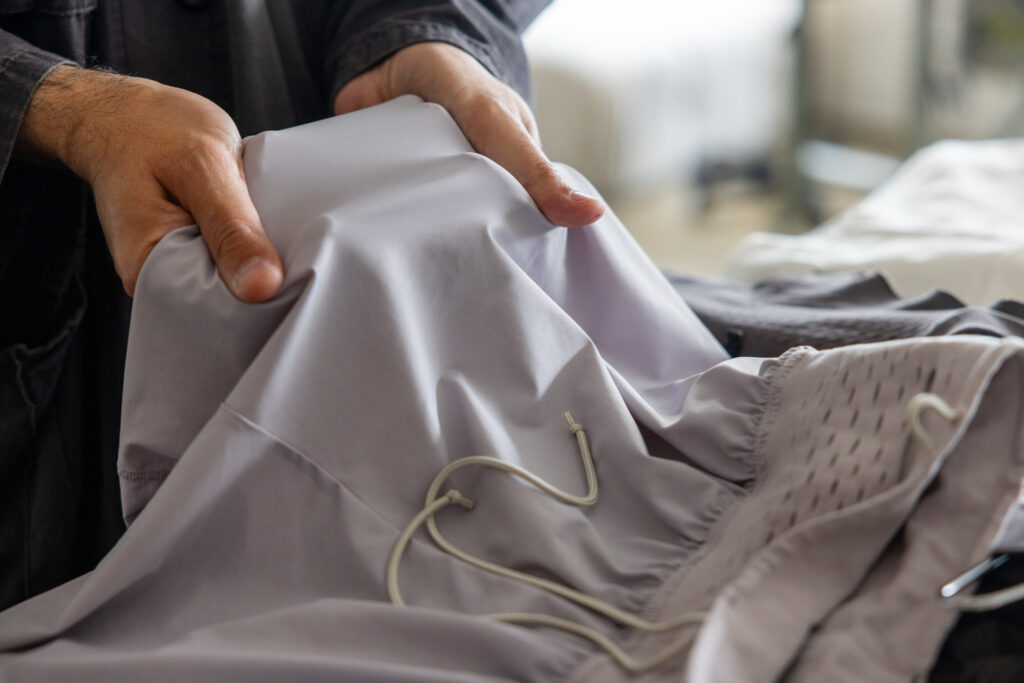
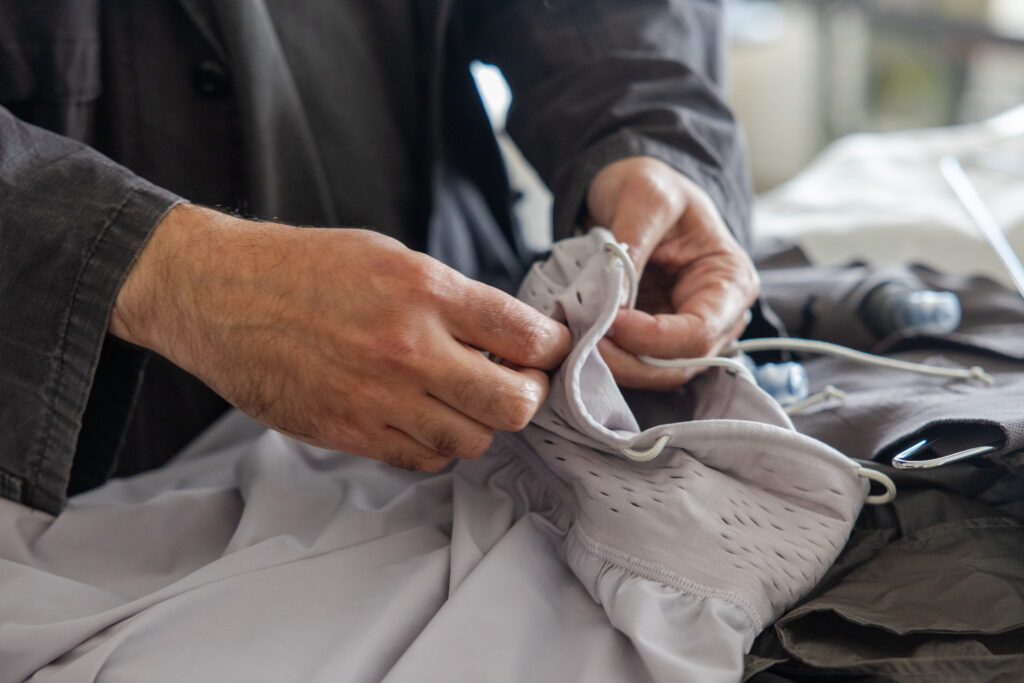
Some of the first pieces that we made were the Polartec Alpha Direct pieces, very lightweight, breathable hoodies. Those are still some of our bestsellers. Then we created the Warp Short, which was a little bit more advanced in terms of the techniques. We came up with a completely new way of making an engineered knit waistband. That took off very quickly because people saw that we were producing something wholly original.
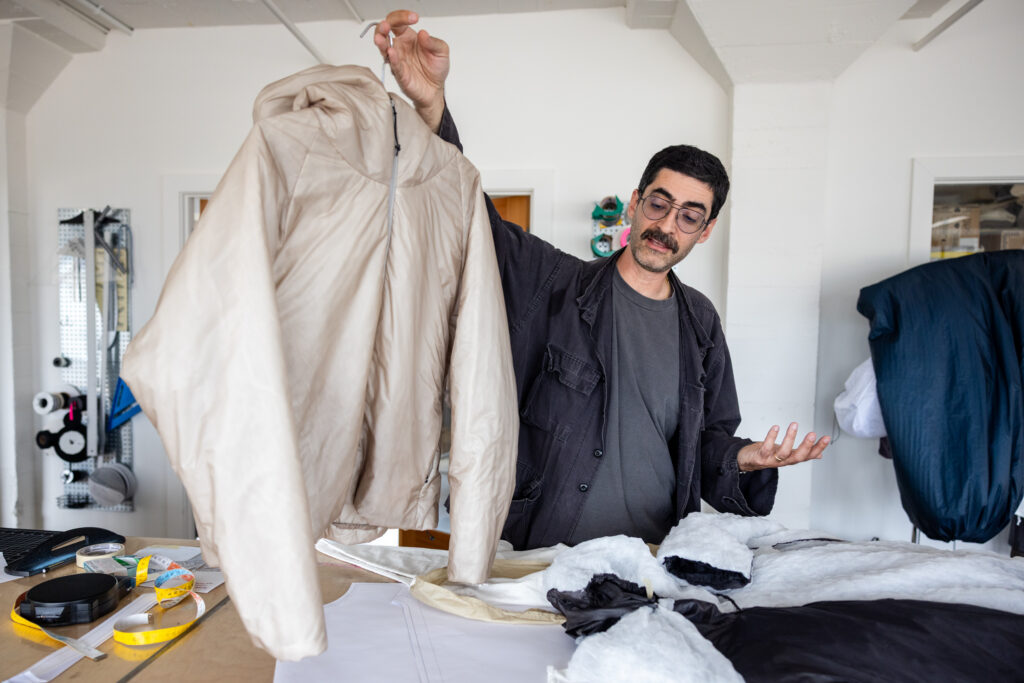
There’s our Heatwave Puffer Jacket, designed not for the hike but when you make camp and the temperature cools off very quickly. There, you’re trying to solve all these competing challenges. For the most part, the jacket is going to stay crumpled up in the bottom of your pack, but it still needs to stay warm when you take it out. You have to have this trade-off between insulation and weight because you’re just carrying it rather than wearing it most of the time. And there we discovered, again, a whole new technology in terms of insulation. It’s almost like an egg box texture, but it allowed us to approach the design in a completely different way. We got rid of all the baffles, all the cold spots that are usually associated with insulated garments. We sent that to a lab in Utah, IDFL, which does all the industry standard testing for sleeping bags. They put it on a thermal mannequin, went through all these very rigorous tests: warmth, compressibility, recoverability. We want to make sure that our brand is not form over function. The first step is always making sure we have a product that works, and that we’re finding solutions and opportunities with the materials.
Q: Can you describe what happens on a day-to-day basis in the studio?
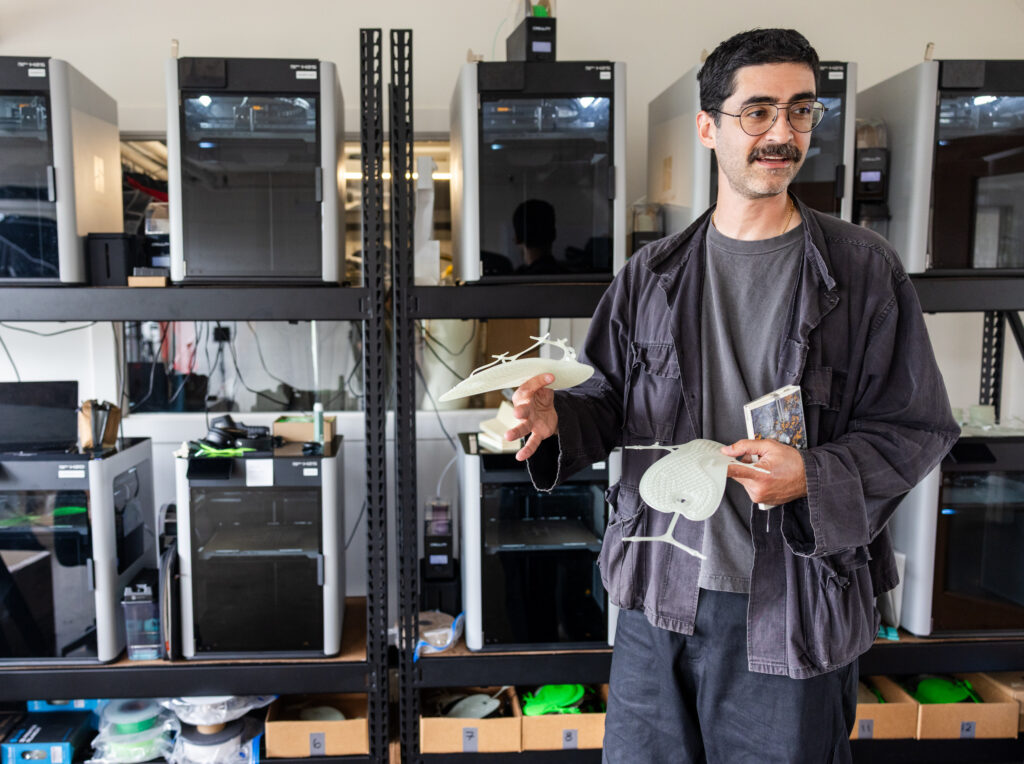
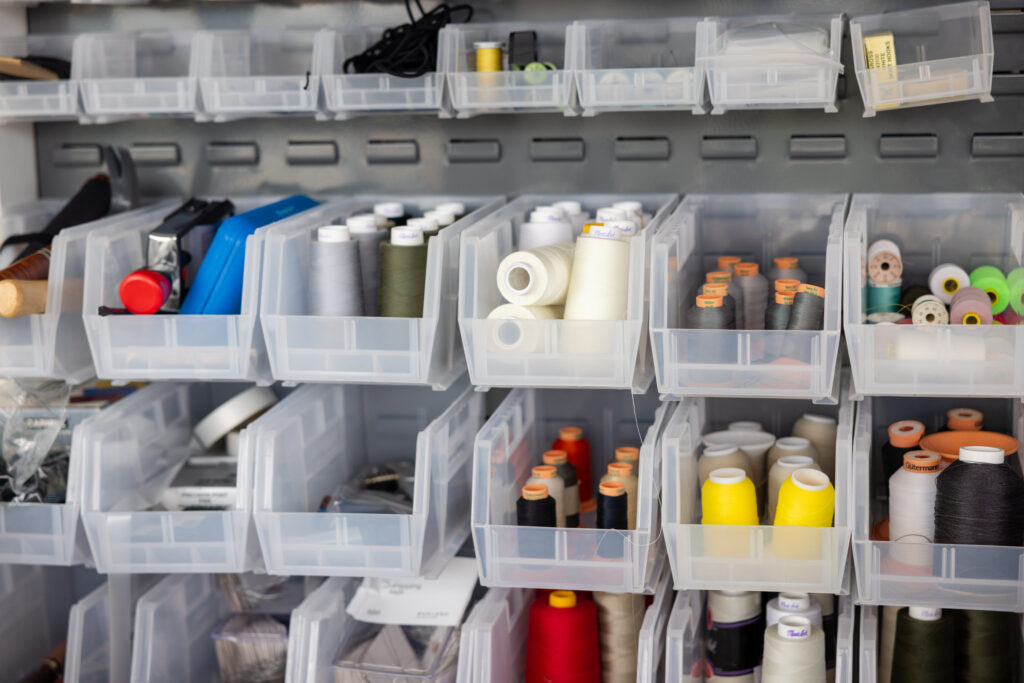
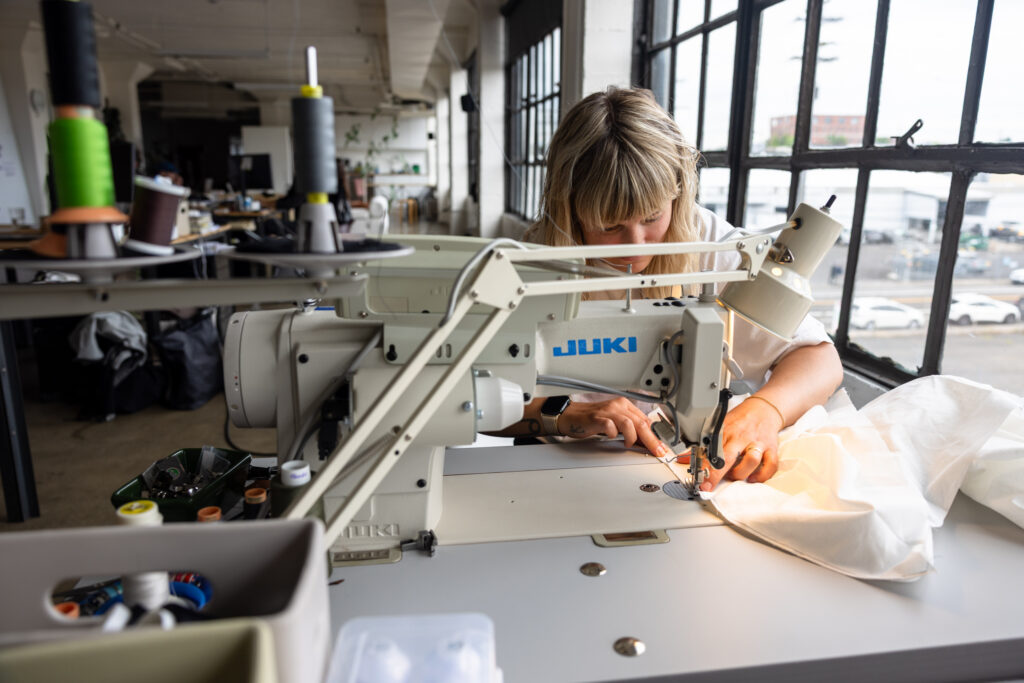
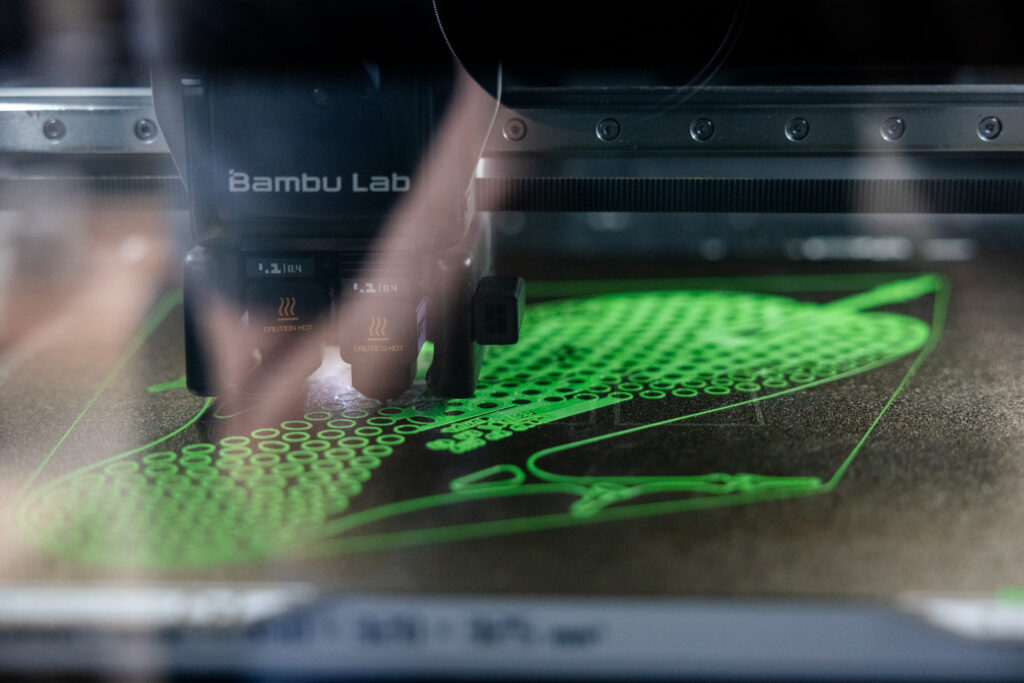
NA: You’ll see the designers sketching, working at their computers, hopefully also being very hands-on. We make samples here in the studio, translating sketches into real products, seeing how they work and function. We have the workshop, the cutting table, the sewing machines, making things in a kind of traditional way. But on the other hand, you’ll see something like the print farm where we’re working at the cutting edge of 3-D printing, not just for prototyping but also manufacturing.
Q: You use 3-D printing for manufacturing?
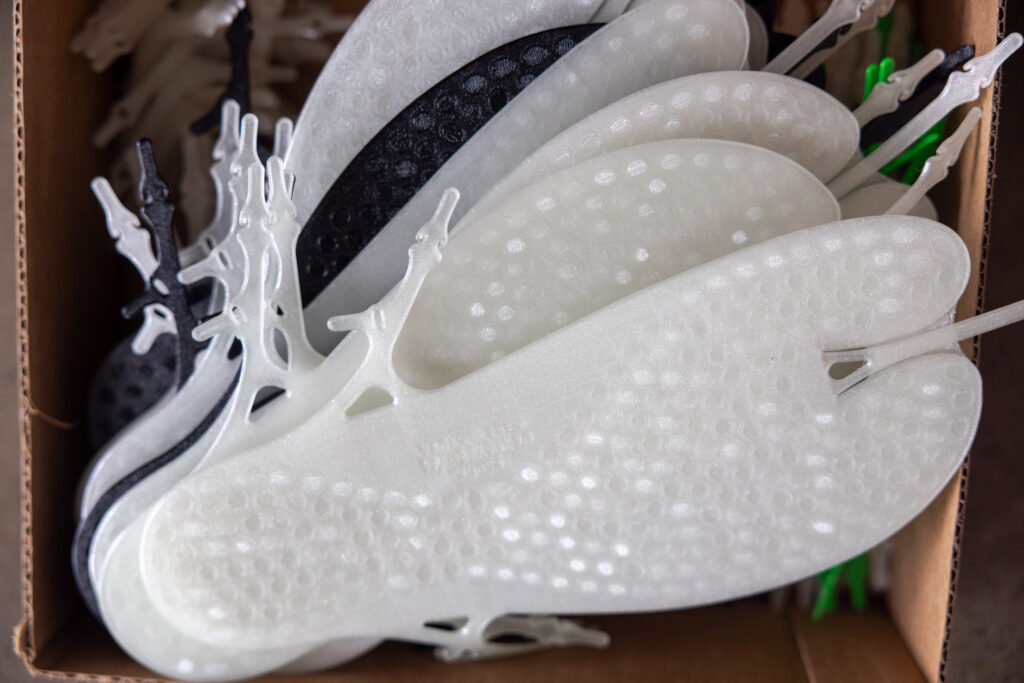
NA: Yes! Our Footprint Camp Sandal is an ultralight sandal, not necessarily for hiking but for when you get to camp and want to air your feet out. Or if you want to make a river crossing and you don’t want to get your trail shoes wet, you strap them on and you’ve got traction and protection to go through a river. Start to finish, those shoes are designed, developed, and manufactured in-house. We’ve got a whole array of 3-D printers handling that. It’s quite unique.
Q: Other than the Camp Sandal, where is most of your manufacturing done?
NA: Our manufacturing really depends on the product. We want to make sure that we’re manufacturing in the best way with the best materials. Take our t-shirt, for example. We have a utility patent that was just approved on our t-shirt, which is probably the first time that’s happened for a t-shirt in over 100 years because we came up with a new process of making it. To get the raw materials and to manufacture a t-shirt, there’s probably no better place in the world than L.A. So we make our t-shirts there, as well as the Alpha Direct that comes from Polartec. For the Heatwave Puffer Jacket, we work with TORAY, an amazing Japanese textile manufacturer. For some of the engineered knit products that we make, we work with Italian factories. And then sometimes we might make components that then get shipped to the US alongside, say, a Japanese fabric, and then everything gets cut and sewn in the US. So it’s quite a blend. It’s quite international.
Q: In addition to the namesake brand, you also have a branch of the business that does design work for other brands. Can you tell us about that?
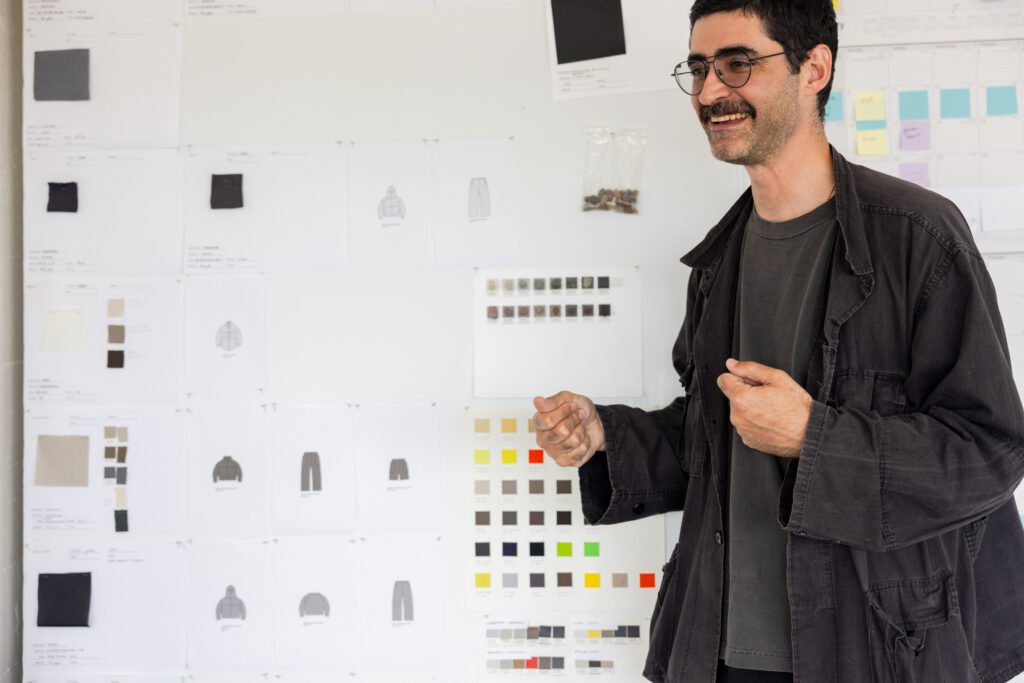
NA: I do see design inherently as a service. When we’re designing for another brand or company, we’re making sure that we fulfill their needs, the needs of their customer, respecting their history. We really tailor our work to the needs of those businesses. One of the big clients we have is Goldwin, which is a big Japanese company focused on very high-end technical outdoor gear. For them, we work on Goldwin 0, a sub-brand. They give us a lot of freedom and challenge us to come up with new ideas for them. It’s very innovation-driven.
That collaboration is super rewarding in the sense that they have so many capabilities and resources as a big company. Myself and the rest of the design team loves working on it because it gives us these capabilities, more resources than we as a small company usually have. And I think likewise for them, as a big company that has to operate in a certain way, working with us as a smaller studio that’s a little bit more nimble and has a little bit more freedom allows us to offer them a completely different perspective, to try things out in a very hands-on, fast way. The partnership is quite reciprocal in that sense.
Q: Where do you see the company headed in the future?
NA: I want to keep being a designer, keep sketching things, keep making things. It’s not a business with an exit plan or a financial goal or anything like that. We’ve grown quickly, and I want to keep growing because scale allows for certain things. We’ve gone through the phases of not even being big enough to make the minimum order for the fabric that we wanted. It’d be great to be big enough that we can afford to buy the raw materials that we want or work with the factory that we want to work with.
I think there’s room for more innovation in gear and apparel. If I look at a parallel industry, footwear, there’s so much innovation and new companies and disruption that’s happened. We’re still going through it. I don’t think that we’ve seen that same disruption in the outdoor gear industry. But I feel like it has been bubbling away beneath the surface, especially with the ultralight community, the make-your-own-gear community, especially here in Portland. Brands like Senchi or Moonlight Gear or Cnoc…all these brands are coming up. Maybe they haven’t got through to that threshold of entering the mainstream, but I feel like that balance is about to tip and I’d love to be part of that, to challenge the established way of doing things.
That’s one of the things I love about Portland and the West Coast: it still feels like the frontier. It still feels like a place where you can do new things, and doing new things is encouraged. In Paris, where I started, there’s the fashion establishment and a set of rules from which you do not deviate. But being here, the possibilities are wide open.
Portland A&O powered by Prosper Portland supports the success of Oregon’s 800+ Athletic and Outdoor firms through community, peer-to-peer learning, events, and programming.
Portland A&O Community features are our way to highlight different jobs, roles, and programs impacting and supporting Oregon’s impressive A&O industry. By sharing stories, advice and experiences, we can continue to support the industry and the people who make it thrive.
If you have a product, company or personal story to be featured, share with us!
Prosper Portland creates economic growth and opportunity for Portland. Our vision is to make Portland one of the most globally competitive, healthy, and equitable cities in the world by investing in job creation, encouraging broad economic prosperity, and fostering great places throughout the city. We aspire to be a workplace of choice with passionate staff excelling in an open and empowering environment and sharing a commitment to our collective success.
Portland A&O powered by Prosper Portland aims to support the success of Oregon’s 800+ Athletic and Outdoor firms through community, peer-to-peer learning, events, and programming.
Prosper Portland/Portland A&O strives to support emerging A&O/Consumer Products brands by providing opportunities such as assistance with attending wholesale trade shows, education and peer support, and networking events.

