Founded in a garage by entrepreneur Gilad Nachmani, Minimal Gear has gradually expanded to include several sub-brands: first, Cnoc Outdoors, a line of hydration sacks and water bottles; and then Diorite Gear, a series of carbon fiber telescopic trekking poles.
Recently Minimal Gear launched its third sub-brand, Cowboy Camping, a creative partnership with outdoor industry veteran Whitney La Ruffa. Designed for nights sleeping out under the stars, the Cowboy Camping line features go-to essentials such as ground sheets, sit pads, stuff sacks and zip cubes.
We spoke with Gilad Nachmani at Minimal Gear’s headquarters in Southeast Portland.
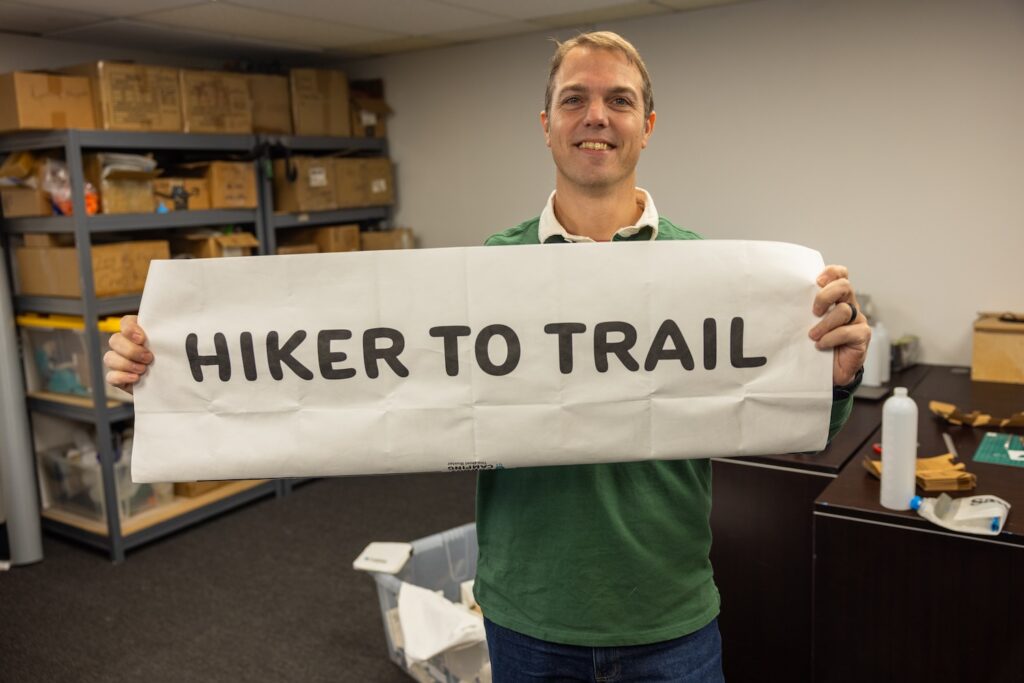
Q: When did you start Minimal Gear, and how long have you been in this space?
Gilad Nachmani: The company started in my garage nine years ago, and then moved to a warehouse across the street—that was about seven years ago. We moved into this current space six months ago, and as soon as we moved, we ran out of space so wound up expanding into the space next door as well.
Q: That seems like pretty rapid growth.
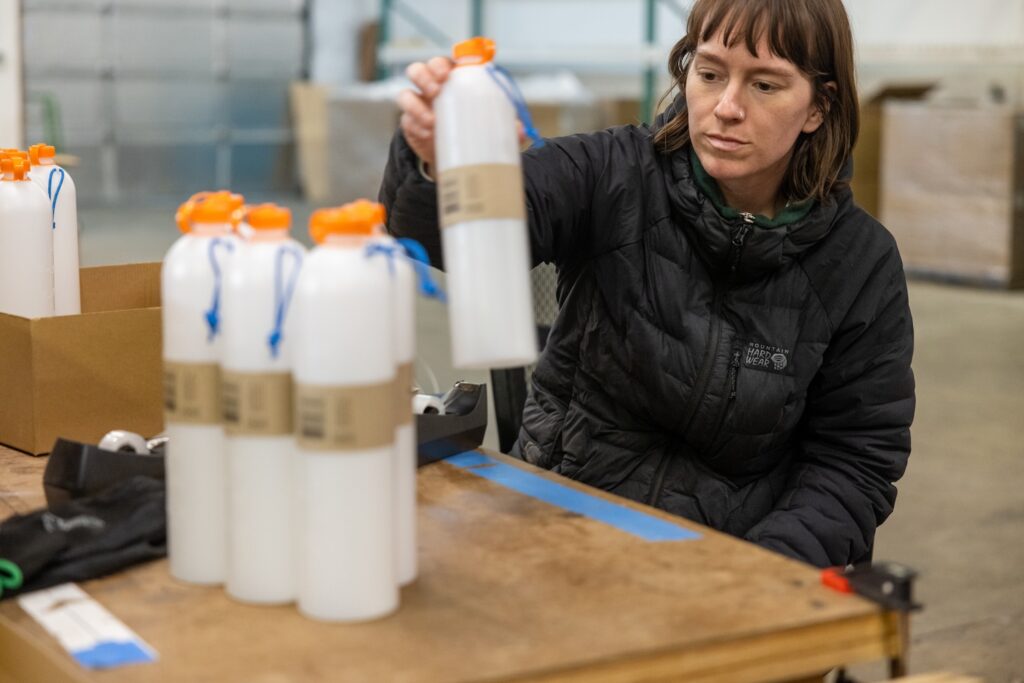
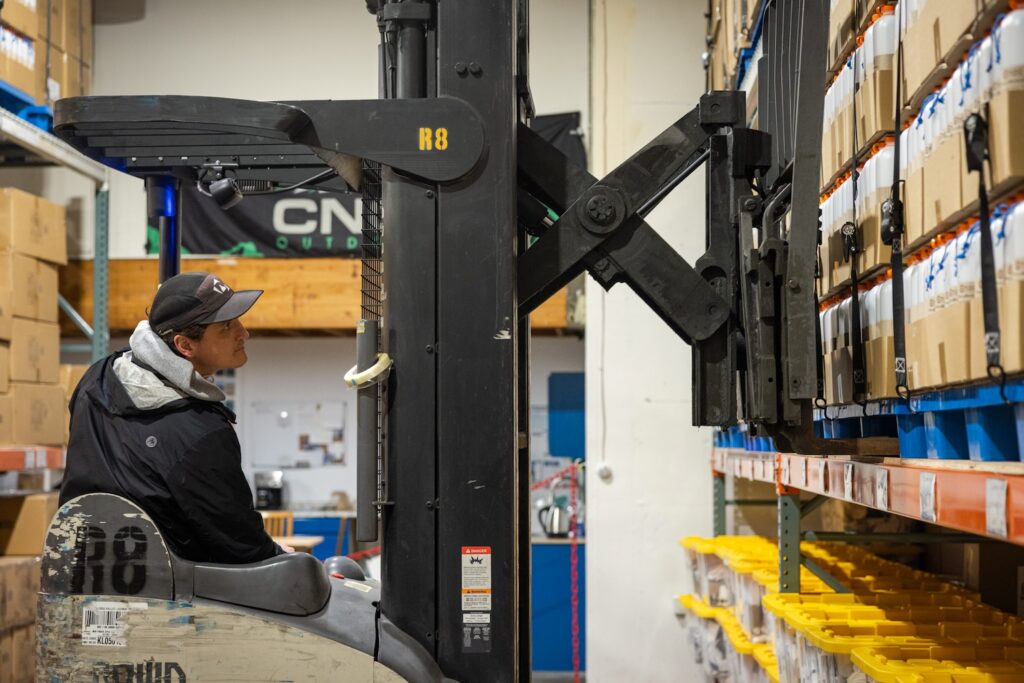
Nachmani: The move was dictated in some ways by additions to our product line. Most of our products are collapsible water containers. By definition, because they’re collapsible, they’re small and don’t take up a lot of space. Then we started making hard-sided bottles, which store a lot of air. So, we need to store all the air somewhere!
We also doubled our team last year from four people to nine, so we needed more office space. We’re pushing to reshore our manufacturing, and we recently bought a printer that will enable us to print on our bottles here in-house. There’s a whole infrastructure that we needed to set up in order to be able to print here.
Q: Take us back to the beginning. What is your background, and what was the path that led to Minimal Gear’s creation?
Nachmani: I come from the outdoor industry. I used to be a buyer and a merchandiser in the U.K. before I moved here with my family. I was born and raised in Israel, which is a very entrepreneurial country. In Israel, if you need to do something, you just go and do it.
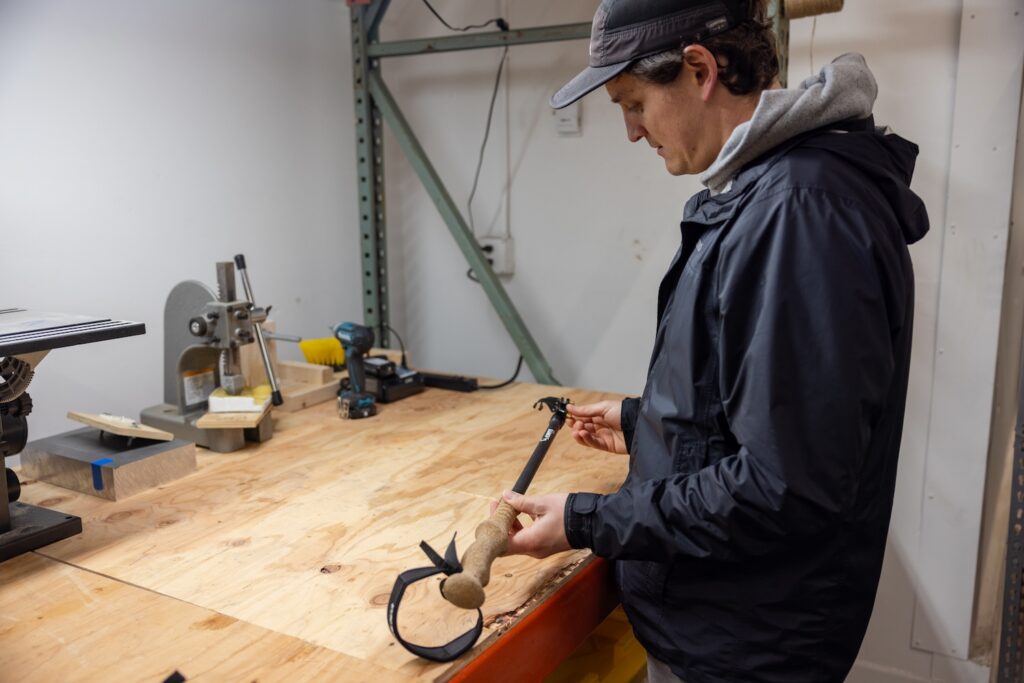
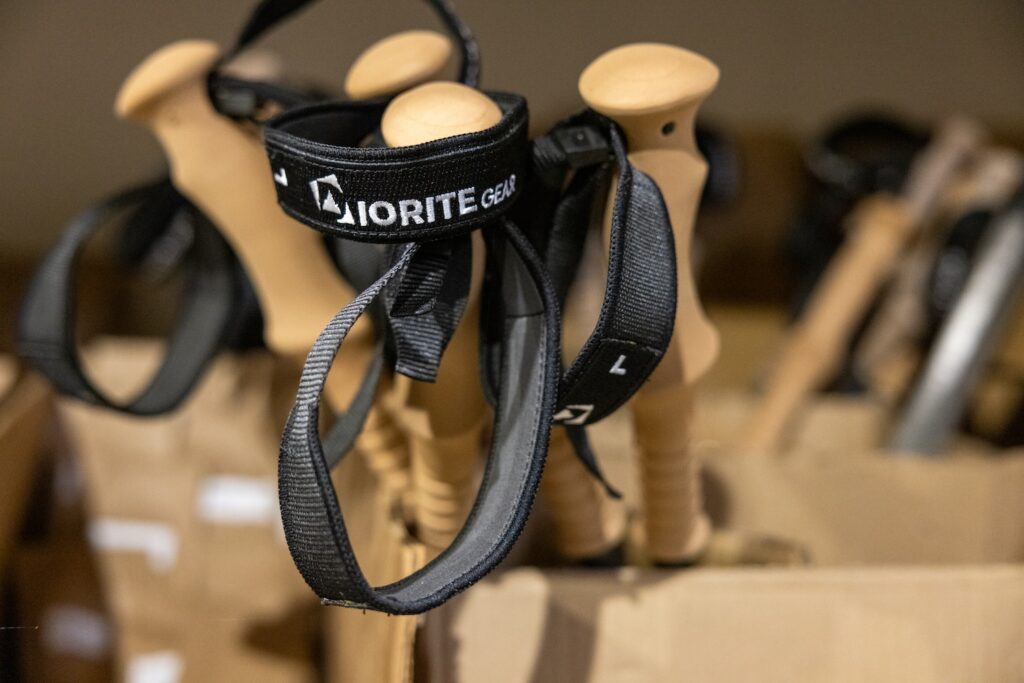
The whole story really began with hiking poles. I was frustrated that the designs that were available at the time were just not quite what I wanted. My wife at some point teased me, saying that if I think I could do it so much better, then I should just go and do it myself.
The idea for the water container actually came from my father-in-law. He went on a rafting trip and complained about his water filtration bags. He knew that I was someone who could design and make things, so he pushed me to give it a try. For a while, I dismissed the whole idea, but eventually I thought maybe I should give it a go. And that’s how that container came to be.
Q: Describe the water container. What made it special?
Nachmani: It’s a container used to scoop dirty water from a stream or a lake. There’s a threaded opening at one end where you can attach a simple filter, and by doing so you can easily clean your water while you’re outdoors.
I was hoping that about a dozen people a month would be interested in it. Apparently not. There are thousands of people—probably in the hundreds of thousands—that are interested in something like that.
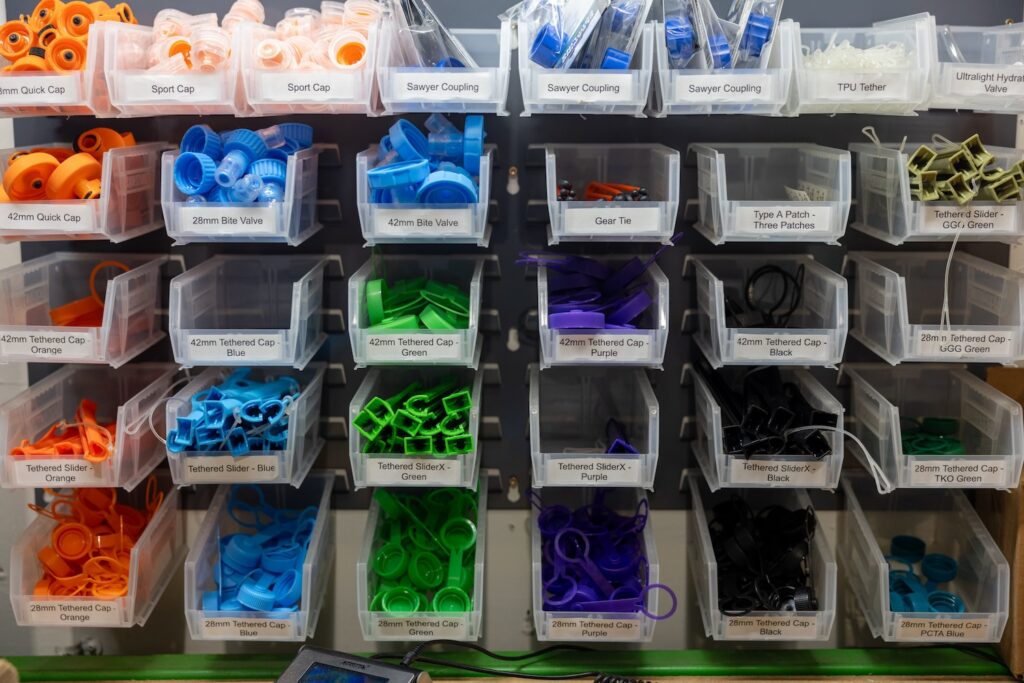
It’s to the point where we now manufacture these for other brands, too. The threads on our bags are 28-millimeter threads, so they’re universal. They’re not proprietary. They work with any filter in the market, which is really our claim to fame. There was some pushback from companies who didn’t like the idea of having a universal thread, but the idea is to have the best solution for the user and not necessarily for the manufacturer.
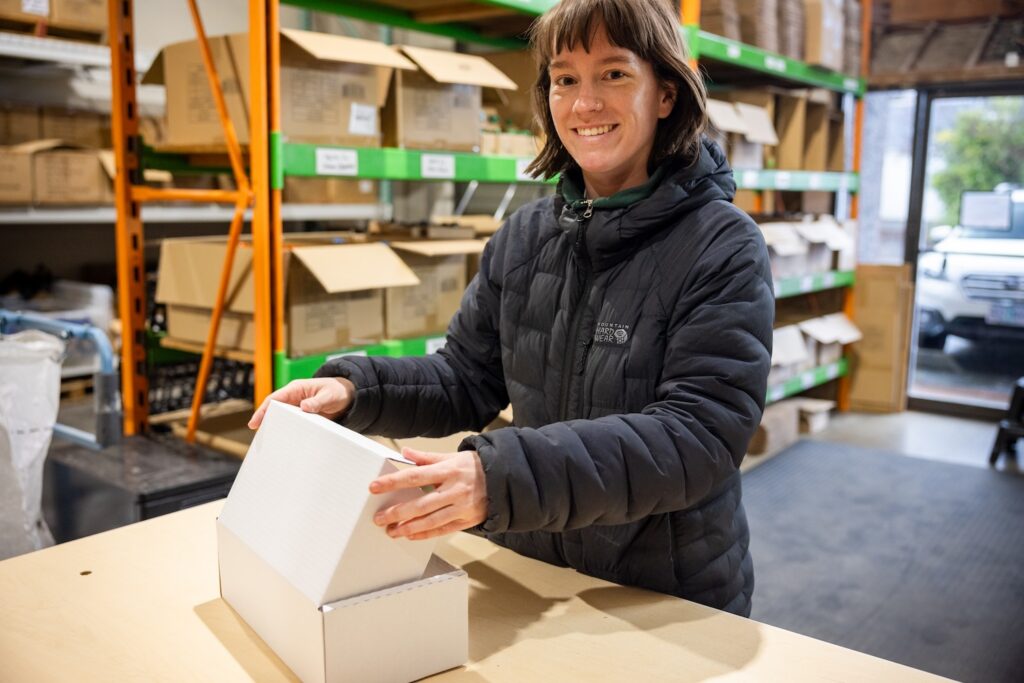
Q: You talked earlier about the growth of the company. Tell us more about that process? Would you say it’s been linear?
Nachmani: Absolutely not. In the beginning, it was two other people and me. The company went through a whole bunch of iterations. The hydration bag aspect started growing rapidly—honestly, it was too big of a growth. It turned into a huge operation. The investment was well north of half a million dollars for a company that was making three quarters of a million dollars. It was just not sustainable. So slightly ahead of the start of the pandemic, interestingly enough, it all slowed down and got stuck. That forced the company to shrink, and forced me to reassess.
I went back to being a one-person operation for a while in a small space across the street. And then a lot of COVID money got released to help small businesses—that was the last $45,000 we needed to get a new product to market. So I got two new people again, started making poles, started getting back into the flow, started building.
In 2021, there was an explosion in the outdoor market. Everyone was hiking. We were in the right place at the right time, and the company moved from three quarters of a million to a million, and then one and a half. It was very, very quick. We survived that COVID time better than most because I had learned from what had almost happened to the company at the end of 2019. I stayed on a very conservative growth pattern while everyone around us was going wild. And then when there were market fluctuations in 2023 we were able to hold fast.
Q: Minimal Gear has a number of different sub-brands, including Cnoc. Why did you decide to separate them out?
Nachmani: In 2024, we realized that the hydration aspect of the brand made the poles part of the company disappear, so we decided to split the two brands into Cnoc Outdoors, the water bottles, and Diorite Gear, the hiking poles.
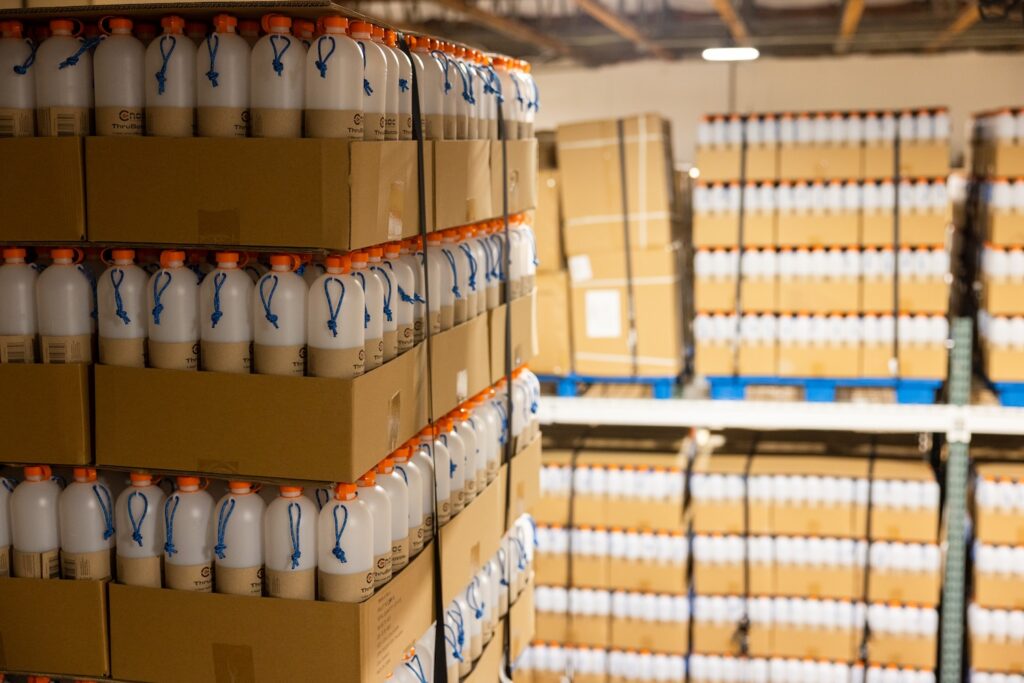
The conversation about these products is very different. The poles are made here. They are made from locally sourced materials and components—the carbon fiber comes from Mount Vernon and most of the plastic pieces come from Corvallis. It’s a very handmade experience with a short supply chain. On the other hand, the hydration products are mass-produced. We’ve been producing them in China, but are taking steps to reshore that process and try to start making them here in the US.
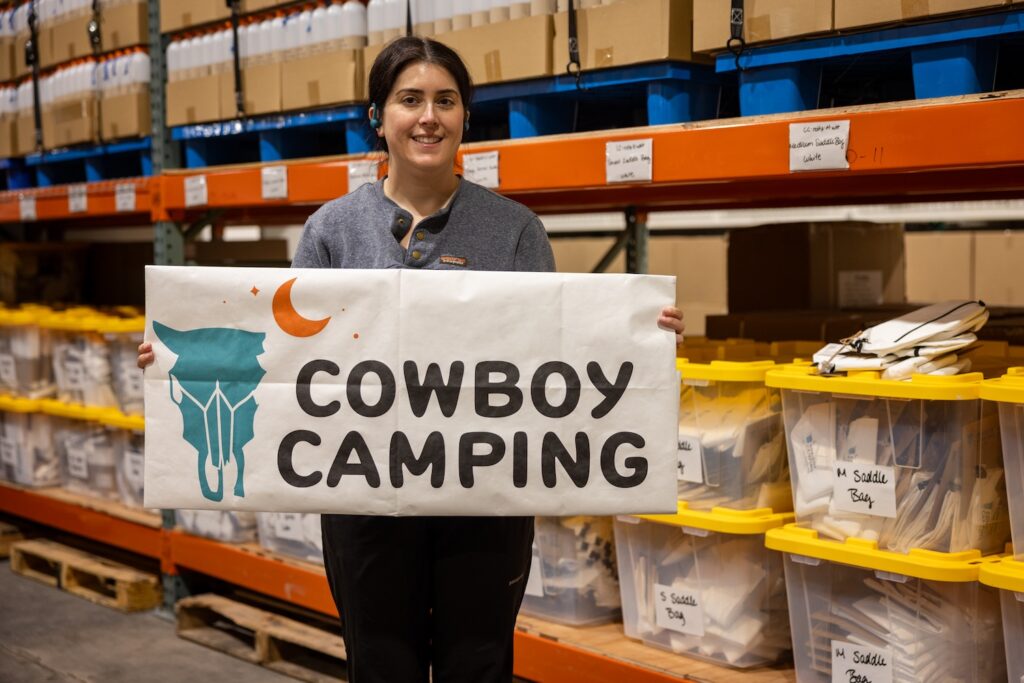
Q: You recently launched a new brand, Cowboy Camping, with Whitney La Ruffa. How did that collaboration come to be?
Nachmani: I met Whitney at the ISPO trade fair in the summer of 2024, and we became friends. Cowboy Camping was always in the back of his head. Originally, the inspiration came from his thru-hike of the Continental Divide Trail; he had the idea for a line of ultralight backpacking accessories but it never got traction at any of the companies where he worked.
Last year, he shuffled jobs and found himself seeking a creative outlet. We were chatting, and he said, “Maybe I’ll just go and start that brand I always wanted.” I reminded him that running a company is not the same as making stuff. It’s a far cry from that. You spend most of your time in meetings, managing people, and doing paperwork. I pointed out that Minimal Gear has all the logistics already in place to create a new brand. So the process started: taking his idea, the core of his connections and concepts, and then forming those into a cohesive range.
I am a logistics and operations person. He’s a sales and excitement person. So, in a way, the collaboration is perfect.
Q: What products fall into the Cowboy Camping brand?
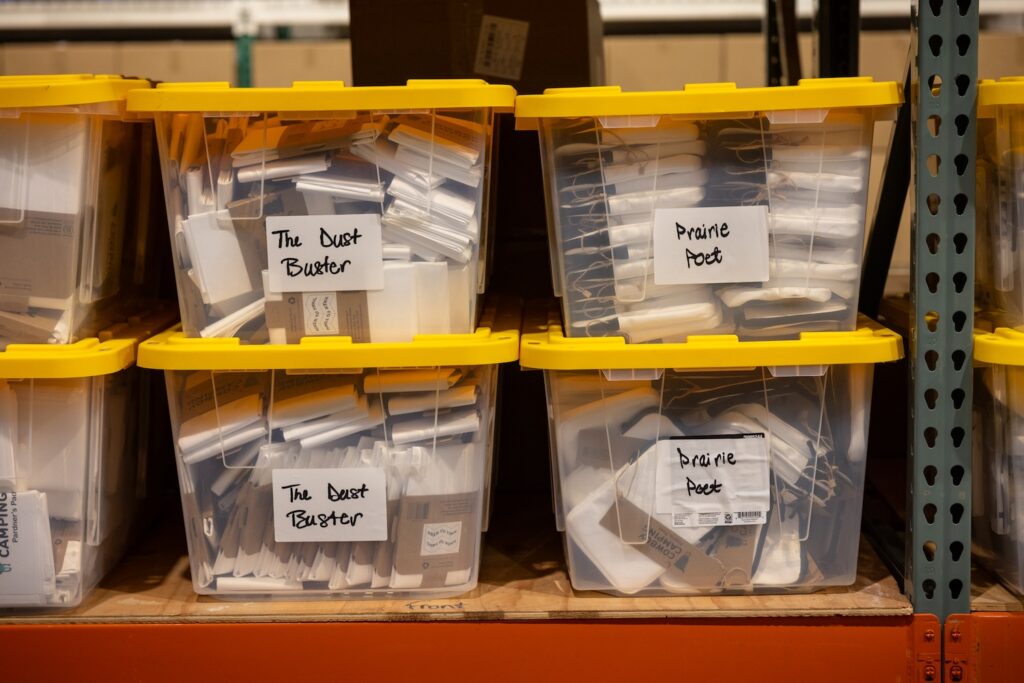
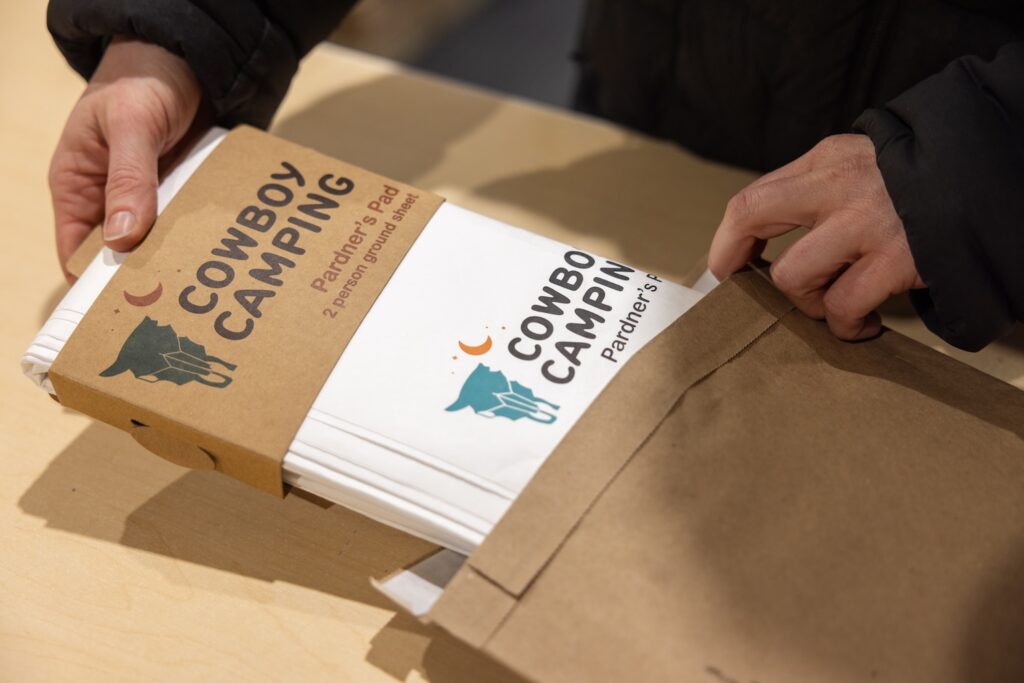
Nachmani: Currently, we have 15 products. They’re all white, simple, and functional. They use a flush spun fabric—similar to Tyvek, but we use a different variant. It’s light and durable and mostly waterproof.
I like to think that we are now at the canvas stage. This is the canvas; let’s see what we can make with it. I’m hoping we’ll get other people inspired and excited about it. It’s going to be a very fun brand for us. I’m enjoying the fact that my team is also excited to work with it.
Q: Why was Portland the right place for you to build this company?
Nachmani: We are very much a Portland company. We often get the question, “Why don’t you move somewhere cheaper?” especially as we expand and bring machinery in. I get asked, “Do you really want delivery to Portland?” The answer is yes. This is what we are, where we are. A big essence of our company culture is tied to it being a Portland company. Most of our products say “Made in Portland” on them, not “Made in the US.”
Q: How has the Portland outdoor community played a role in building your business?
Nachmani: We’re part of OOA, the Oregon Outdoor Alliance. I think we were sponsor number two for them, way back when they were starting. We’re not a big company. They now have companies like KEEN that I’m sure are contributing a lot more money than us. But I was there putting in the first 50 bucks before anyone else did, even when we didn’t have the money to spare. That’s important. We need alliances here.
Over the years, we’ve done a lot of things with them. We got some grants. I think the problem is that we sit in an uncomfortable place in the outdoor industry. Usually companies in our industry, they really are a “two people, half a million dollars” size or else they’re KEEN. There are almost no 10- to 50-people companies, or at least very few of them.
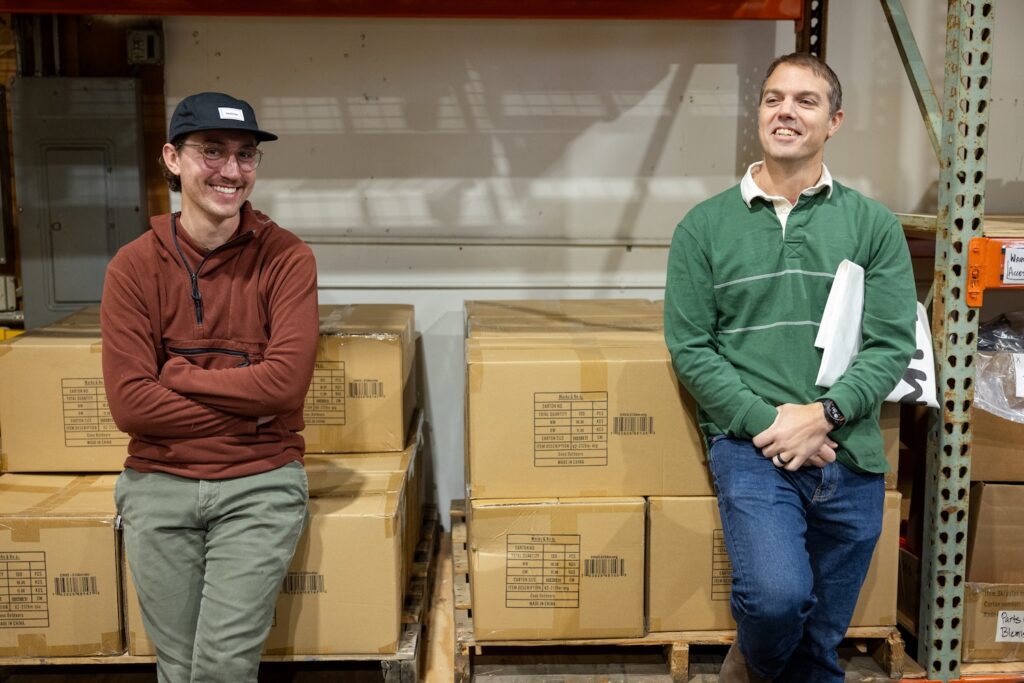
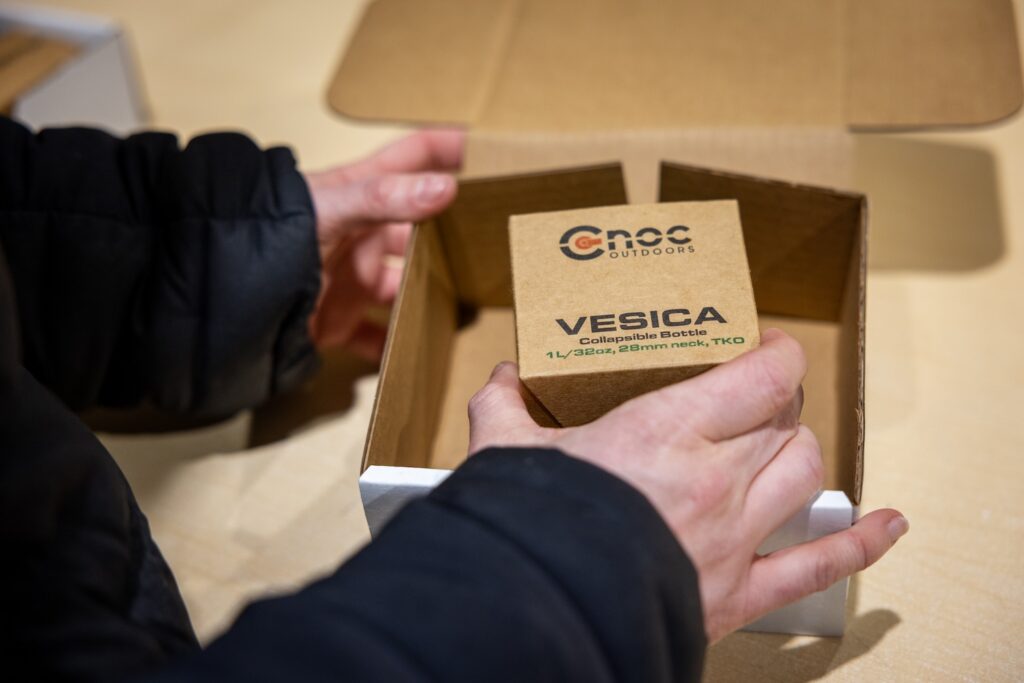
Q: Minimal Gear is a B Corp, and you’ve mentioned that you’re working to reshore your manufacturing process. Can you speak to the ethos you hope to bring to the company’s operations?
Nachmani: We are indeed a B Corp. That was one of the first things that we did. My wife still jokes that we had an impact manager before we had an operations manager.
The way I define our ethos is that the purpose of this company is to improve the life of everyone connected to it. We produce things that we want. We sell them. The money stays here, in the company. I don’t have a beach house. I just upgraded my truck after 10 years because my wife said she wouldn’t let my kids get in my old truck anymore.
Becoming a B Corp was a great way to frame all of those beliefs in a cohesive way. We are working very hard to bring our manufacturing in-house to Portland. We offer wages that are higher than the industry in general. That is the idea. The company’s here to do this first and foremost. As long as we are true to that ideal, it will continue to work. The growth is there, but it’s there to serve a purpose.
Portland A&O powered by Prosper Portland supports the success of Oregon’s 800+ Athletic and Outdoor firms through community, peer-to-peer learning, events, and programming.
Portland A&O Community features are our way to highlight different jobs, roles, and programs impacting and supporting Oregon’s impressive A&O industry. By sharing stories, advice and experiences, we can continue to support the industry and the people who make it thrive.
If you have a product, company or personal story to be featured, share with us!
Prosper Portland creates economic growth and opportunity for Portland. Our vision is to make Portland one of the most globally competitive, healthy, and equitable cities in the world by investing in job creation, encouraging broad economic prosperity, and fostering great places throughout the city. We aspire to be a workplace of choice with passionate staff excelling in an open and empowering environment and sharing a commitment to our collective success.
Portland A&O powered by Prosper Portland aims to support the success of Oregon’s 800+ Athletic and Outdoor firms through community, peer-to-peer learning, events, and programming.
Prosper Portland/Portland A&O strives to support emerging A&O/Consumer Products brands by providing opportunities such as assistance with attending wholesale trade shows, education and peer support, and networking events.

