Spooltown was created to fill a glaring gap in the soft goods production market: a midsize factory that can produce high-quality products, scaling up manufacturing as a business grows.
It may seem like a simple proposition, but responding to the needs of clients while navigating a unique niche in the production landscape remains an ongoing, learning experience for co-owners Sara Tunstall and Abby Malzahn.
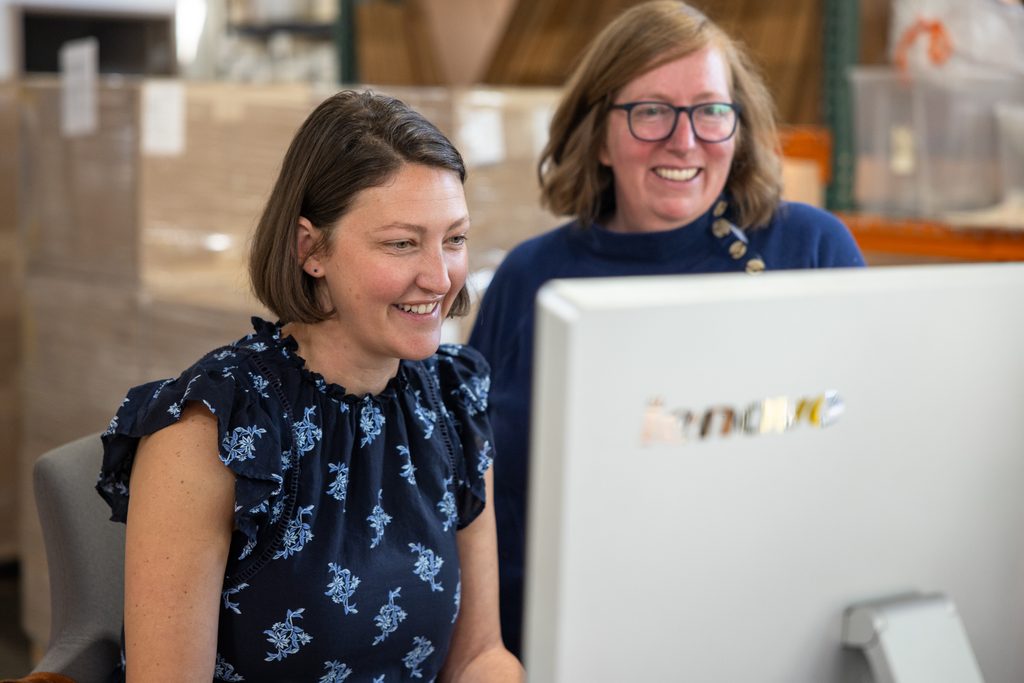
We met Sara and Abby at the Spooltown factory to learn about how the business started, and how they hope it will continue to develop.
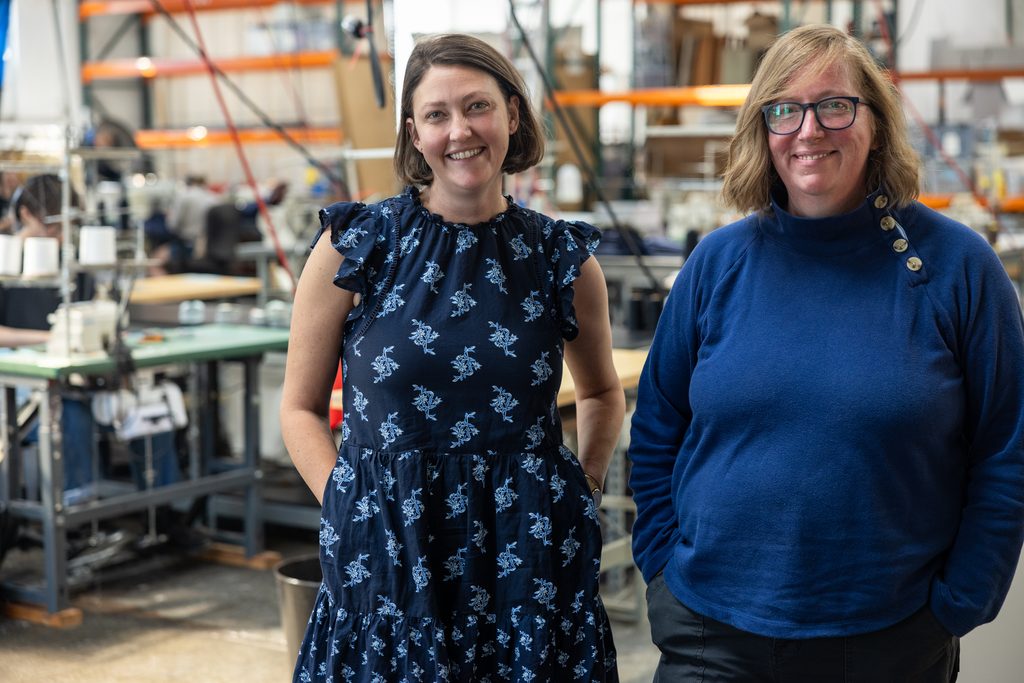
Q: Can you tell us how the company came to be?
Sara Tunstall: Abby and I worked together at Queen Bee Creations for five years or so before I started Spooltown. Abby was hired at Queen Bee right out of college, and I was doing production management.
I was managing all of Queen Bee’s production, primarily handbags and wallets. Over the years, people had come through asking if we would make their products, and it just never made sense for Queen Bee to make other people’s things. So we’d say no, but it just felt to me like there was an opportunity there.
I asked Rebecca, the owner of Queen Bee, whether it would freak her out if I started a factory, and she was like, “Oh, that wouldn’t freak me out at all. In fact, I would be your first client. “Oh, that wouldn’t freak me out at all. In fact, I would be your first client. I never really wanted to have a whole production facility. It just happened organically because nobody else could do this kind of work.”
I never really wanted to have a whole production facility. It just happened organically because nobody else could do this kind of work. And so then we hammered out the details and I subleased space from her. Basically, one day we split the space in half, and half of it was now mine. I bought her sewing machines, and her employees became my employees, and all they had to do was move to the other side of the building. And then we started getting more clients. Within a year we outgrew that space.
Q: How do you and Abby divide the work?
ST: Abby and I are co-owners. There’s a lot of overlap, and that is one of the things that allows us to actually take vacations. We are both involved in choosing which products and projects we take on. I do the initial intake and sorting out the product development work, and then we decide whether or not it’s a good fit for us.
If it is, there’s a collaborative process for product development before something goes into production. Once it’s production-ready, the client largely gets handed over to Abby.
Abby Malzahn: I coordinate production out there so that we get projects on the right machines, with the right people working the right number of hours, and I interface with the client to get them what they need.
Q: How would you have described Spooltown at its inception? Has it changed at all over the last 15 years?
ST: In the beginning, the idea was to bridge the gap between making things one at a time by yourself and a major production that would be manufactured overseas. Spooltown was intended to cross the bridge and help small businesses grow because there’s so little in that middle zone.
Over the last 15 years, I’ve realized why there’s so little business in that middle zone. It is really hard to make small-run production work. It’s like riding a wild elephant. Very few startups work out in the long run, and so you often go through this whole development phase to make a sample of something and then make one run that’s small so people can test the market—and then they never order again. So that’s one issue. And then the other is we have a ton of clients, and they all have different quality control standards, and they all need things sewn different ways or produced differently with different machines. And so when you make small runs of a lot of different kinds of things, like we do, the scope expands exponentially.
Q: What’s your favorite part of running the business?
ST: I still think the most interesting part of the business is working with startups and doing development work. We’ve never wanted to let that go because it’s really interesting. And some of our best clients have come out of that work.
But it follows the national statistics of how businesses do; it’s only a small number of businesses that really succeed and grow along with us. The goal is to get better and better at figuring out which clients are really going to have their business take off and then try and say yes to those projects. We say no to probably 90% of the business that comes to us.
Q: As you’re making that evaluation, what makes you say, “That’s a great job for us”?
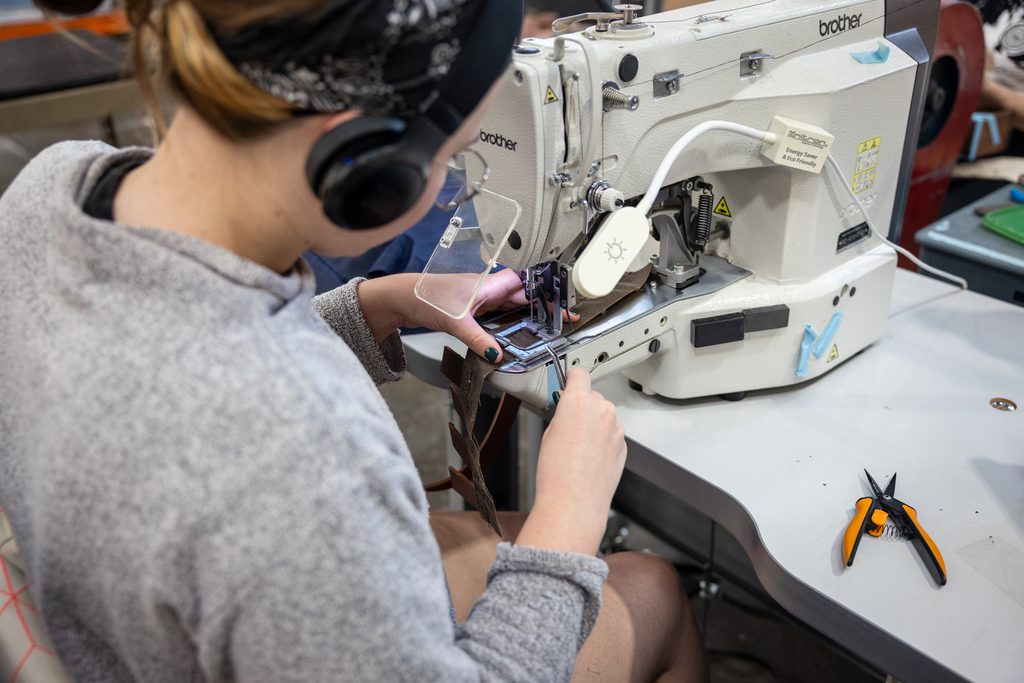
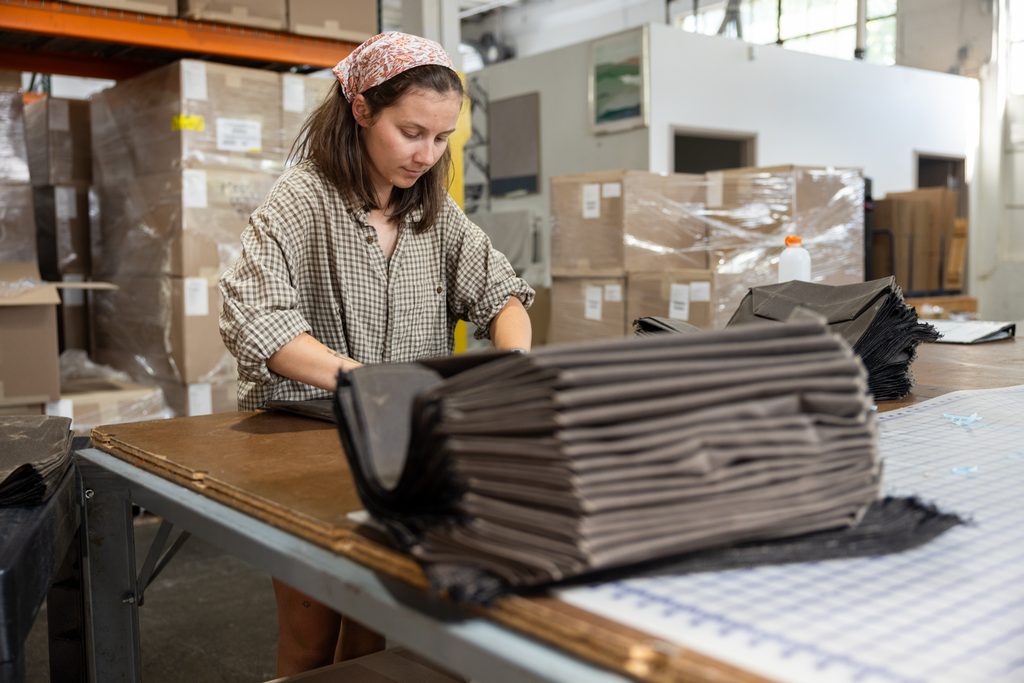
AM: We make a lot of bags. Bags are kind of a shoo-in for us. We work with heavy materials like canvas and denim and leather. Those are a good fit for our kind of heavy duty, industrial machines. We do a lot of home goods. We’ll make pillows all day. We have an insane pillow situation. We make pillows for a ton of different companies and with amazing different fabrics. It’s a great project for us. We do a lot of other tabletop stuff. Aprons are a good fit. We don’t do apparel, but aprons are probably the closest apparel-adjacent item that we make.
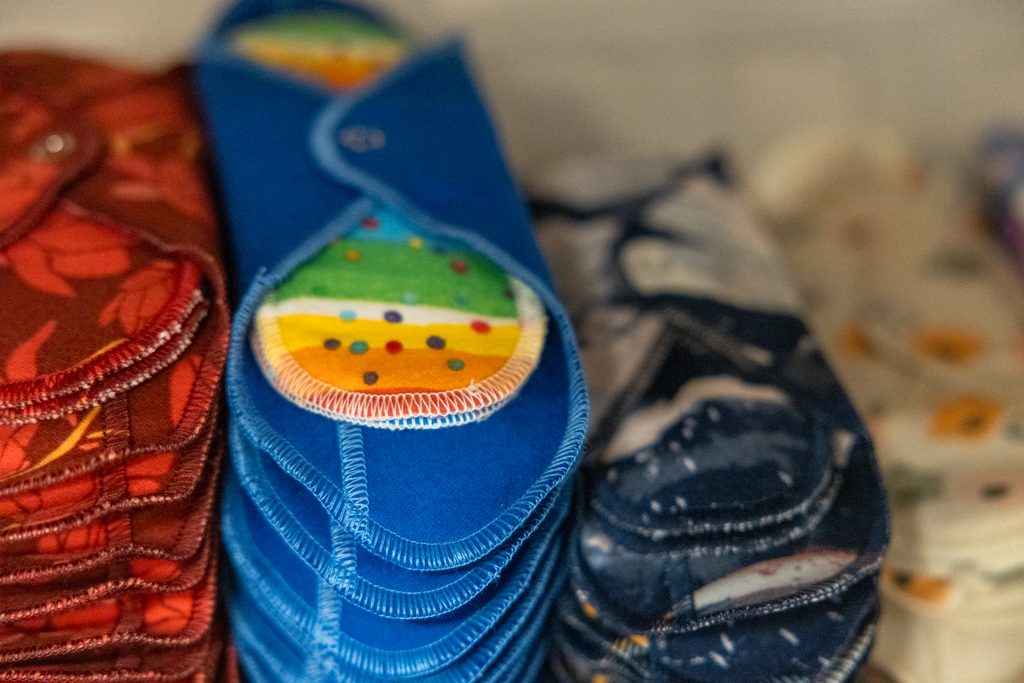
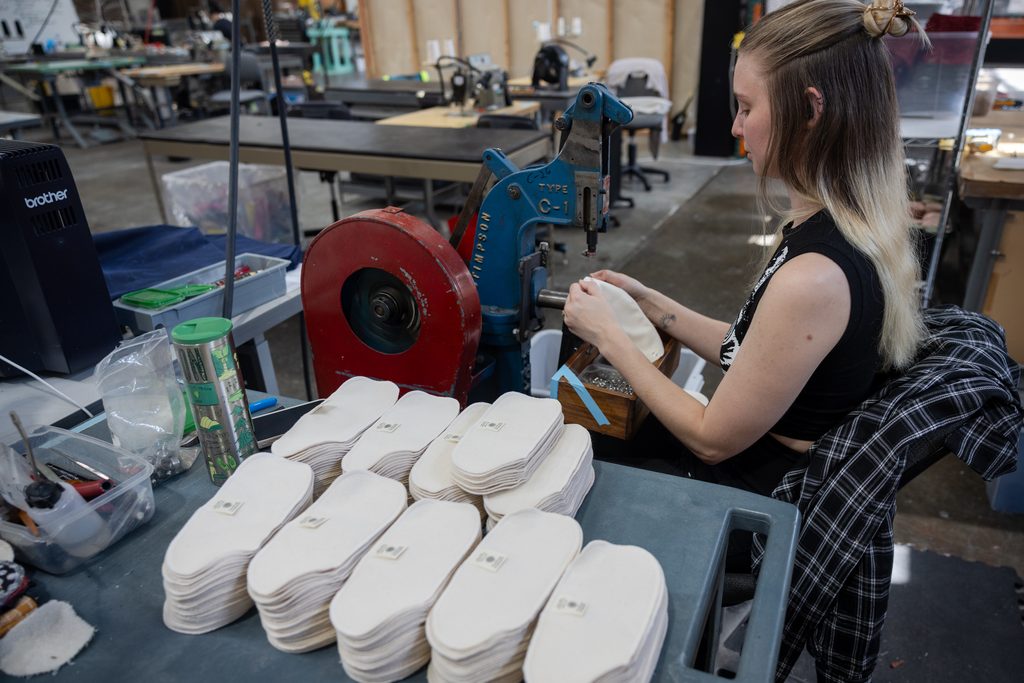
We also manufacture GladRags, reusable menstrual pads. That’s a company that Sara and I bought three years ago. We are pumping those out all day, every day. That’s huge for us.
Q: Are most of your clients locally based or are they all over?
ST: They’re all over. Our biggest client is based out of New York, but we have lots of local clients that we work with.
Q: How do clients find you? Reputation? Connections? Both? How does a company in New York even know you exist?
ST: It’s changed over the years. In the beginning, it was all word of mouth. One of the companies that we worked with early on in Portland was The Good Flock. Marco, the founder, was an ex-Nike employee and had worked with some pretty high-end designers around the world. And so when we were doing production for The Good Flock, he would do workshops with other business owners and would mention us.
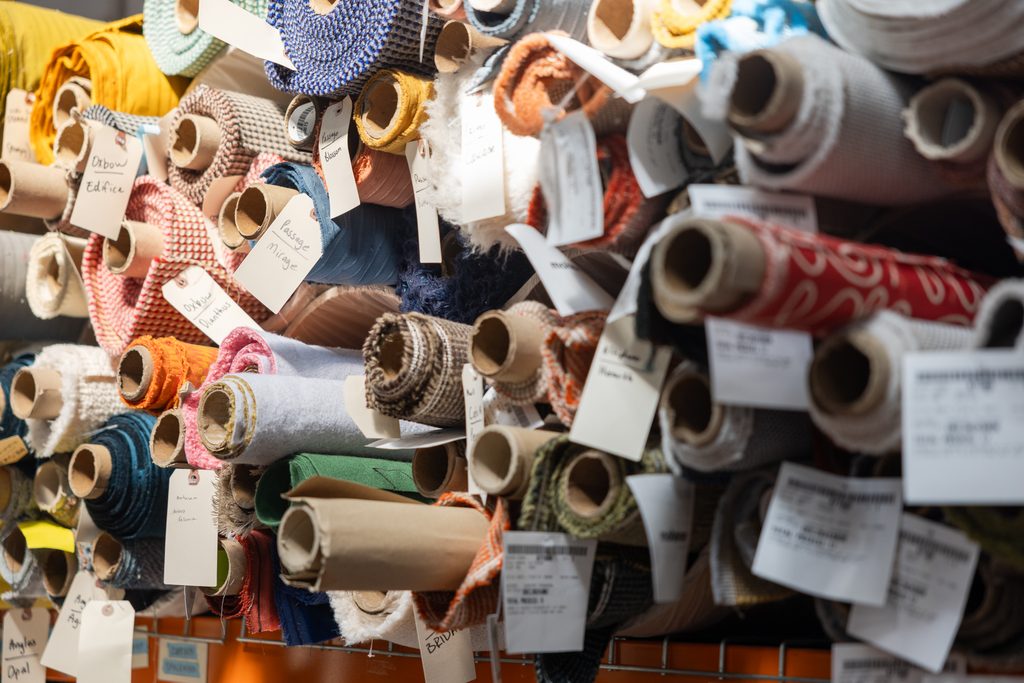
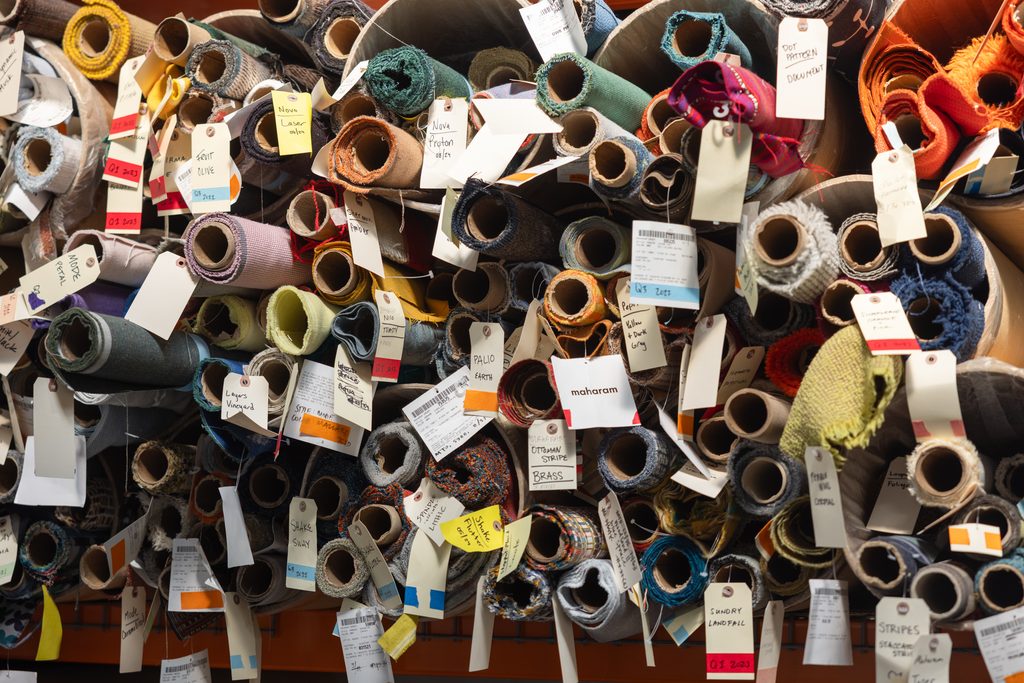
Our client in New York is Maharam, a 150-year-old fabric manufacturing company. They make high-end upholstery fabrics. They were looking for production help with a bag line they were developing, and Marco said, “Oh, you should talk to Spooltown.” They had rejected four other factories, I think, in the US and overseas. And so we just made them some bags, and then they were like, “This is amazing. Great. We love it.”
So we started making their bags and that was really hard work. Their bags were very cool, European designer bags, constructed in ways that were totally new to us. And so we figured out a lot of stuff in that process. And then after we’d worked with them for four or five years, they said, “Well, we have this other program. Would you be interested in trying out some pillows?” And that’s become the mainstay of our relationship.
AM: Thank goodness, because I’m telling you, a pillow is way easier to make than a very complicated European-designed bag.
ST: There’s been a lot of consolidation in that industry. Maharam was bought by Herman Miller, and then they merged with Knoll in the last five years. And so now we’re making pillows for all of those companies.
Q: What is the value proposition that you can offer another company?
AM: Well, for one thing, there’s us. You don’t find a lot of women running a factory like this. We are doing things a little bit differently than a lot of other factories in the US, which have traditionally been run by older white men.
We have extremely high quality control. We don’t make cheap things fast. We make really beautiful, expensive things slowly and expensively. And a lot of these designers who have the margins to charge what they need to charge want something that they can really trust. Our quality is spot on.
ST: I think most small-run production houses largely contract with individual home sewers, and the communication and the quality can be pretty spotty with that kind of production. It’s great if you establish a positive relationship, but it’s really hard to grow beyond a certain point with just one person working out of their house.
We know lots of people around town who work with lots of contract sewers, and they spend an awful lot of their time driving materials and product all around town. So consolidating that all under one house is really helpful and saves a lot of time.
AM: Again, a lot of those contractors don’t really have the capacity to grow. And the fact that we can start small and then grow as a business grows is huge because that scale issue is already taken care of. They just place bigger and bigger orders, and we’ve got it. We can always handle it. As we see people’s success, we can adjust production to match it.
ST: And on the other end of the scale, we’re really nimble. So that doesn’t really happen with overseas factories. You don’t get a lot of communication about how to alter your design to make production more affordable, or quick sample turnaround, and we are willing to do all of that.
AM: We got an email today that was like, “Hey, I need this product made. I just need a couple hundred of them. They need to ship by next Friday.” We’re going to take that job. There’s a rush fee. We can do it, and we will gladly do it. We can shuffle things around. And again, it’s just a couple hundred, but it has to happen now—not very many places can respond to that kind of request.
Q: What does your production process look like? How many people are involved?
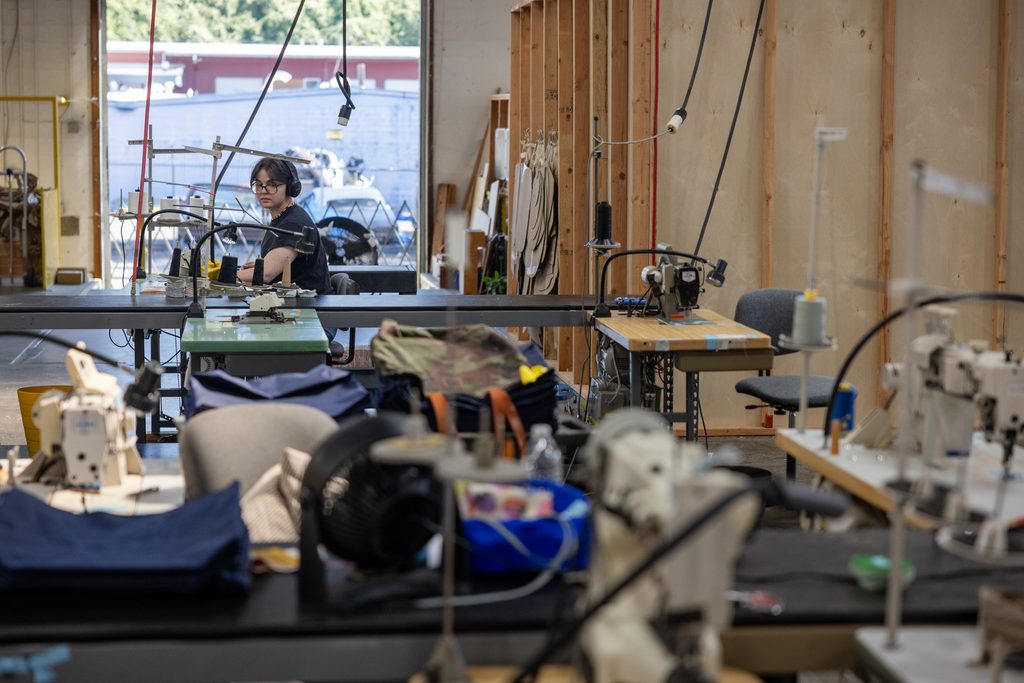
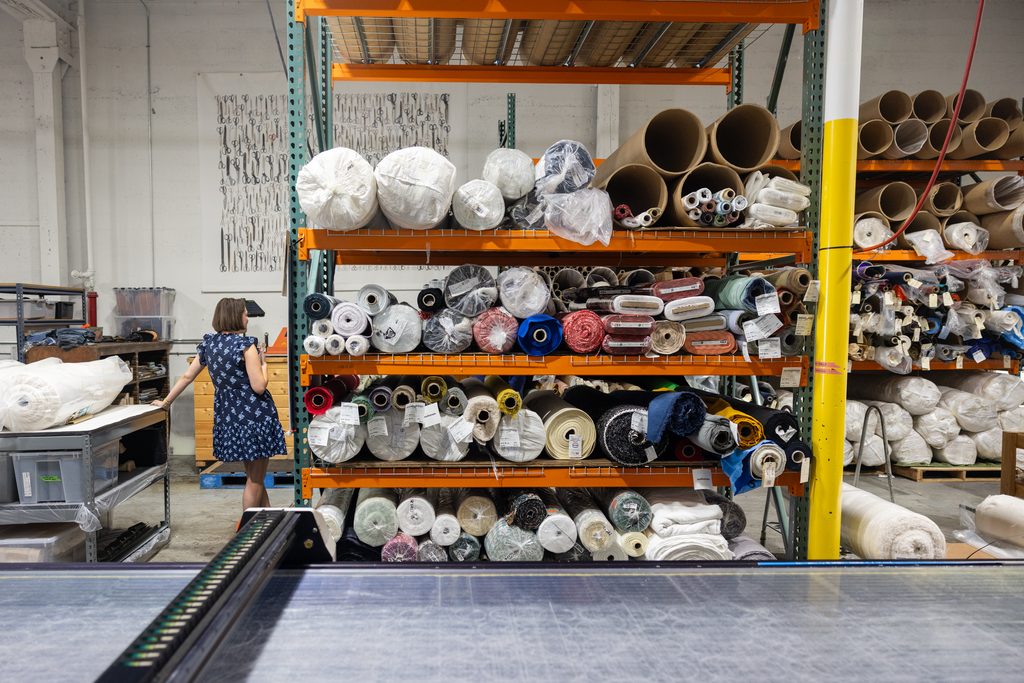
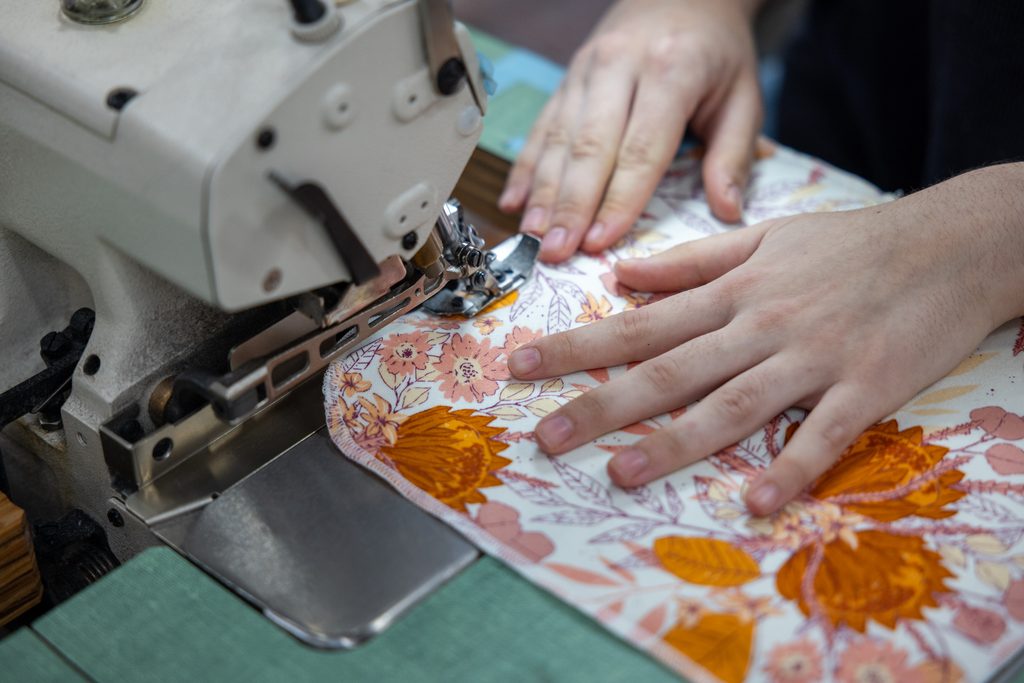
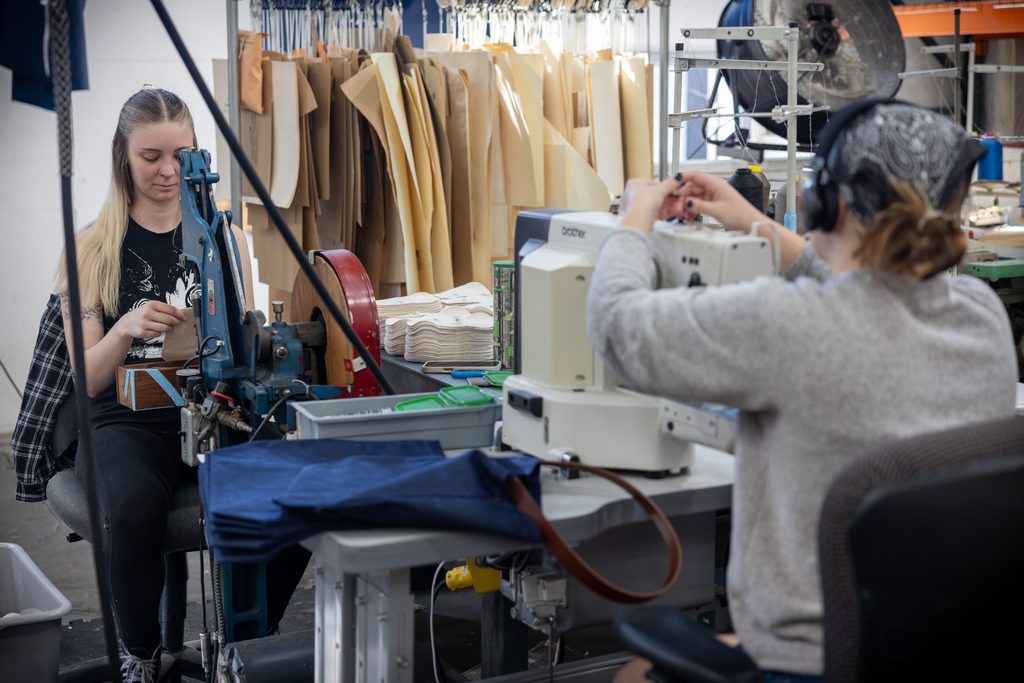
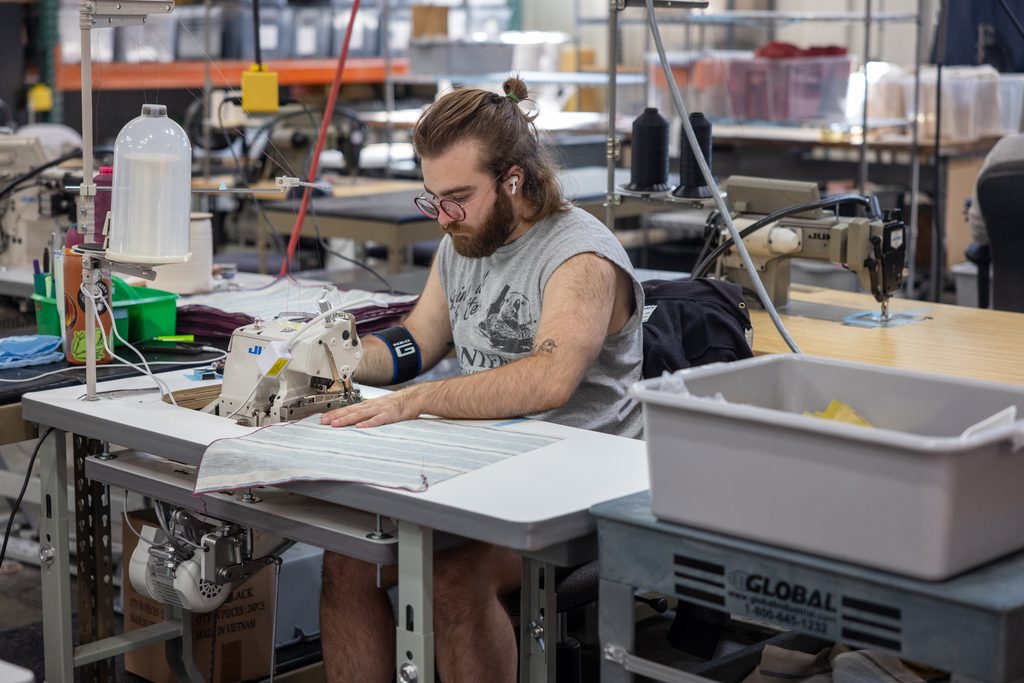
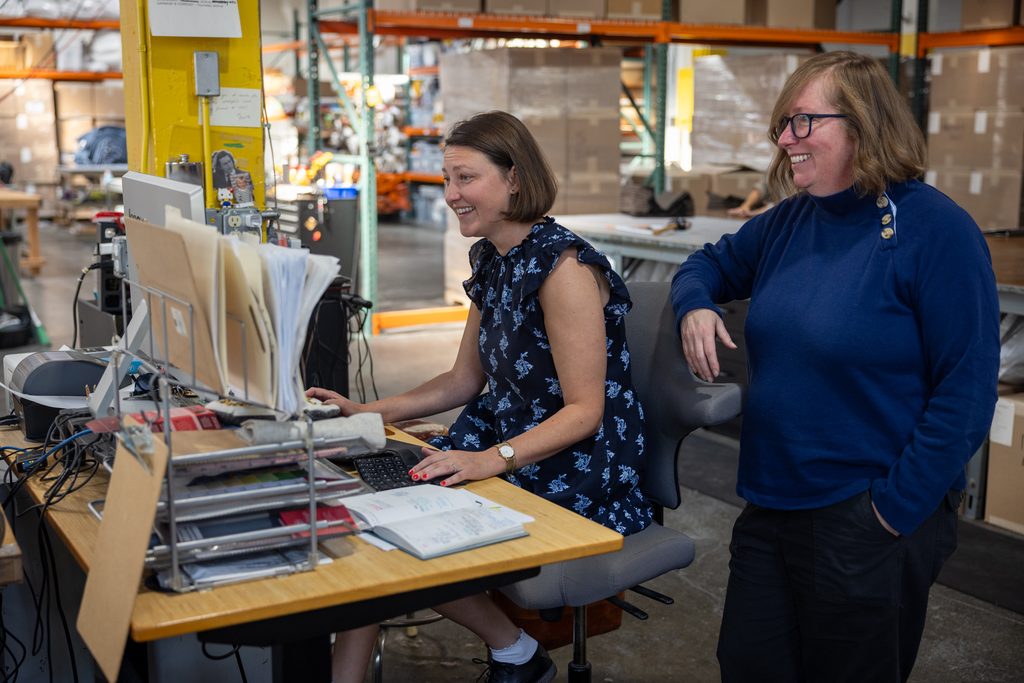
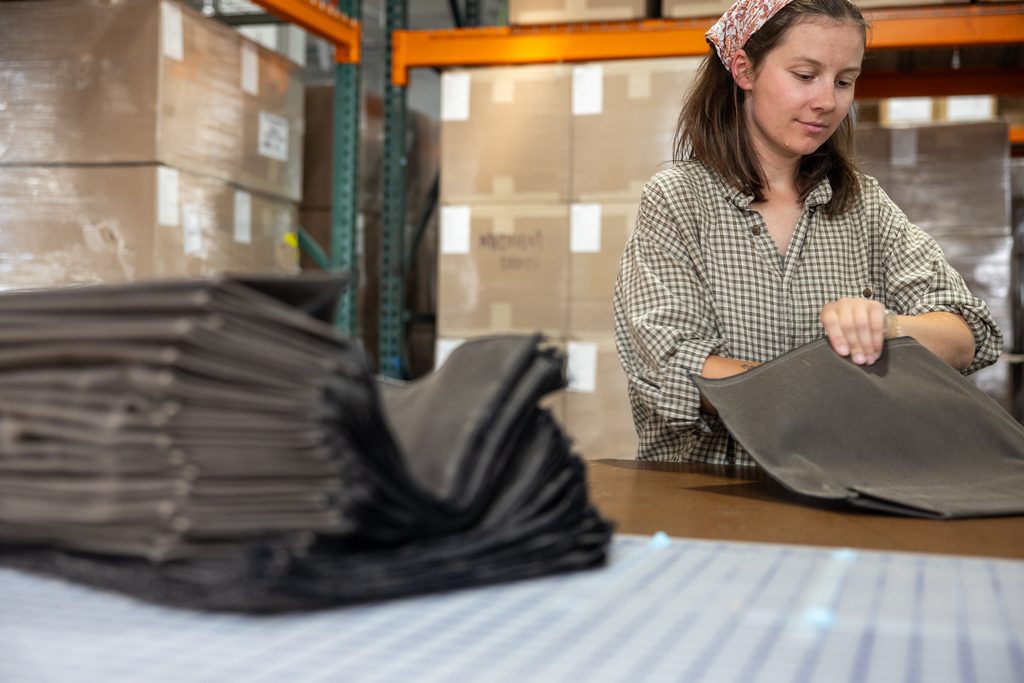
ST: Our previous space, in Southeast, was 5,000 square feet. This space is 15,000. So we’ve grown a lot, but also we’ve subleased some of the space. Right now, we have 11 employees, all of whom work on the production floor. We separate jobs between production assistants and sewers. The production assistants do all of the non-sewing prep work: cutting, marking, packing, QC, shipping, all of that.
AM: The goal is to keep the sewer sewing all the time so that they don’t have to do any of that stuff. We can really utilize the capacity of the machines by keeping them running as much as we can.
ST: Our systems change all the time based on our mix of clients. We find little new tricks that work all the time. I think we’re in constant pivot mode, which maybe is one of the ways that we have made it this far.
AM: We also give our employees the freedom to change the systems as needed. Whatever’s best for your body, easiest on you, whatever helps you get into the flow. It just works more efficiently that way.
Q: How much product is typically moving through here?
AM: We’ve got three pallets of pillows shipping out today, which is roughly 600 units. They’re stuffed, but we try to get them as flat as we can.
ST: And then we make thousands of GladRags a week. We’re also actually distributing them as well, as if we weren’t busy enough.
It’s funny because in some ways GladRags and Spooltown are sort of polar opposites. GladRags is direct-to-consumer, plus some distributors and wholesale. And then Spooltown has been in the business of hiding from the public as much as possible. We don’t put our name on the outside of the building, and we don’t put our address or phone number on our website. That is because you get an awful lot of tire kickers who just want to come in and talk about things for a long time, their ideas, and we don’t have the admin to handle that. We can’t fix a button on your shirt or hem your jeans.
AM: A beautiful aspect of running Spooltown is that we can make this beautiful product and then just hand it off to the client and say, “Okay, but you have to sell it.”
And now with GladRags, that’s on us. It’s really crazy to be on the other side of that. It’s been a steep learning curve, managing that side of the business and finding outside experts to help with sales, ads and web development. We’re still figuring out how we want to grow the business in a strategic way that matches the needs in production and the demand of the public.
Q: How has the city of Portland helped your business?
ST: In many different ways. We’ve worked with Prosper Portland on a storefront improvement grant and energy upgrade in both of the spaces that we’ve been in, and we’ve talked to them about all kinds of different projects.
Travel Portland is another one of our clients that we really enjoy working with. We make products that they take to conventions to showcase Portland. They’ve brought a lot of business our way.
And then Portland itself, it’s just a weirdo community of great, creative people. I’ve been here for 25 years. Abby grew up here. And I just think even still, there’s no place quite like Portland in the US. I think the creative energy is different. There’s a scrappy edge to it where you just have to figure out how to make it work. Here in Portland, we’re really good at doing that.
Q: Is there a community here that you’ve found to be particularly supportive or helpful?
AM: Absolutely. We have a network of old school vendors and sources. We often use those vendors in unique ways. We’re buying stuff from a place that supplies vinyl for fixing up old cars but we’re making handbags out of it. You know what I mean?
Q: What are some of the weirdest projects you’ve taken on?
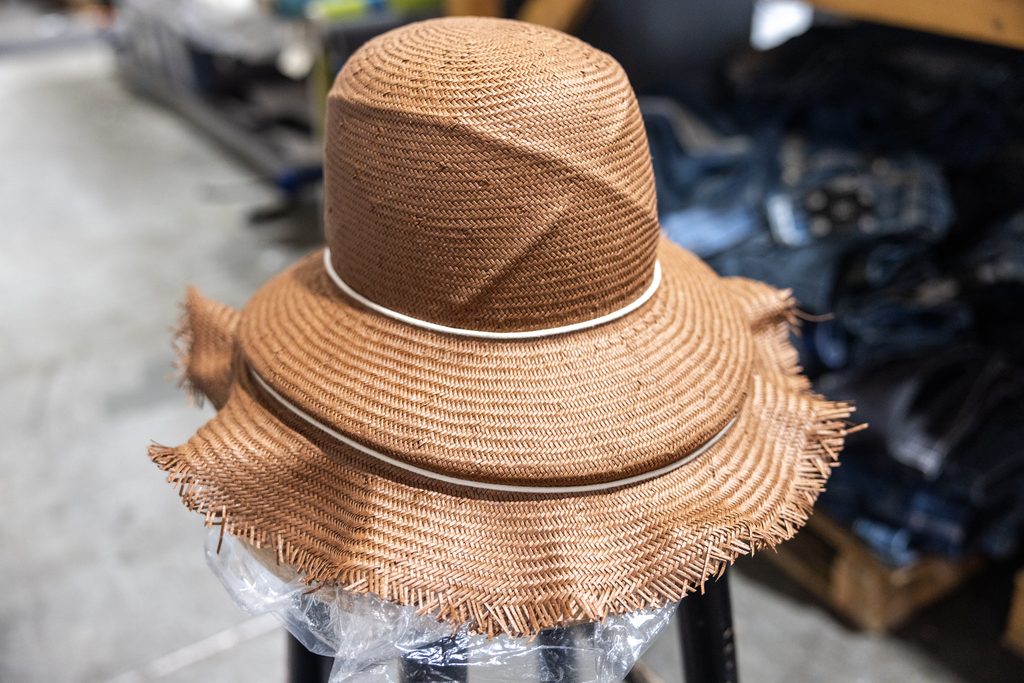
ST: Right now we’re prototyping some straw hats. We do production cutting for some clients. We’ll cut rolls of landscape fabric or fusible interfacing into specific lengths for people.
AM: This is more of a cool one, but we manufacture all the pillows that go to Design Within Reach. That’s a huge business and we’re supplying all the pillows that go nationwide. That feels big.
Q: What do you think the next phase of the business will look like?
AM: My hope for us moving forward is that we can grow GladRags in a way that allows us to be even more choosy about the clients that we accept through Spooltown. There have been moments where we’re in a corner and we’re like, “Well, we’ve got to keep the sewers busy with something, even if it’s not the best fit.” Or we see that there’s a lot of risk in it, that it might not be successful.
ST: We’ve never done traditional marketing, but I have a hunch that AI has been serving up Spooltown as a good small-run production option. The clients that have been coming to us are better and better this year, which is interesting. Just good fits in terms of personality and project.
ST: I would like Spooltown to develop more resources to help startups learn about the manufacturing process. One of the biggest challenges we see is that since the ’80s there’s been a divorcing of design from production. There’s a lot lost there. When things are made overseas, there’s less concern about the labor that goes into them. You can just have a drawing made into something.
But if you’re working collaboratively, if a designer is working collaboratively with a production house, then you’re making really informed choices about what design decisions drive production costs and whether you can viably make a product domestically or whether it needs to be made overseas.
Often clients come to us too late in the game. They have already spent a lot of their product development money, for instance, getting a tech pack made. They imagine that now that they have this drawing, they will just hand it to people, and people will be able to tell them exactly how much it’s going to cost to produce it and will not need to charge them any more money. And largely, those tech packs are unhelpful to us.
I often wish we could catch people before they spend $5,000 or whatever on that process and say, “A cocktail napkin drawing is totally sufficient for coming to us.” No matter what production facility you talk to, you’re going to have to pay for prototyping and sampling. These are costs that people just don’t really anticipate.
AM: Right now we’re working with the design program at U of O, because Tom Bonamici, one of the design heads there, was like, “There’s just a disconnect: we’re teaching these kids how to make those tech packs and design products, but they’re not connected with any of the manufacturing.” So we’re working with U of O to try to bridge that gap from the beginning, and it’s allowing us to see that there are so many resources that we could develop to help people from the beginning, before they’re too far ahead and out of money to bring a good idea to market.
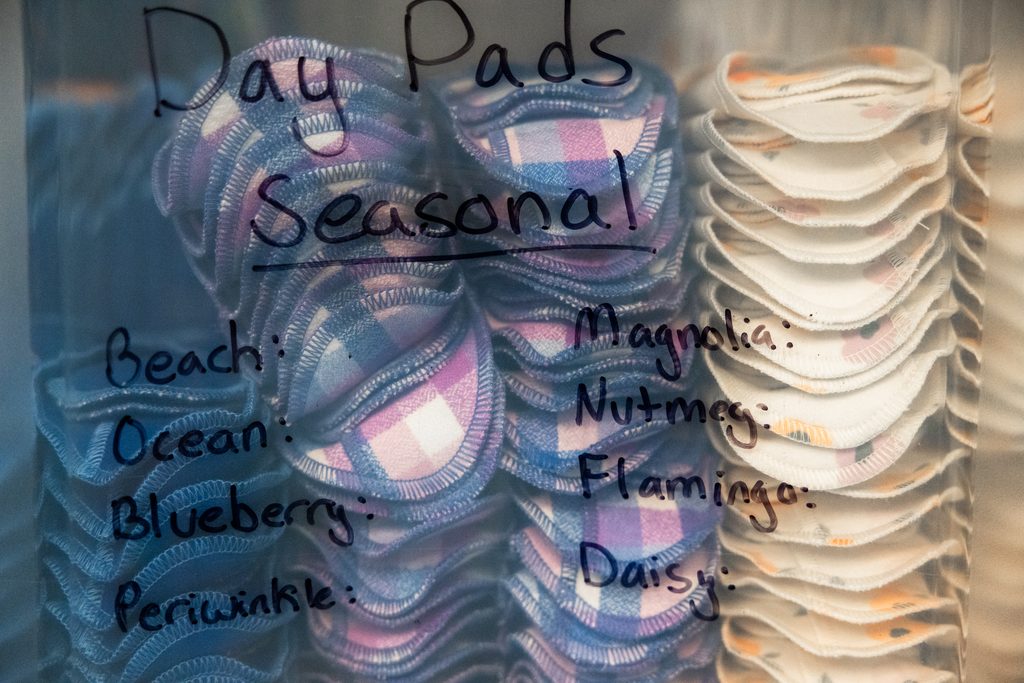
ST: On the GladRags side, we’re working to grow institutional sales and sales to nonprofits. Because we’re vertically integrated, we have the ability to offer deep discounts off the retail price of GladRags. That means that we should be able to get them into schools and at women’s shelters and all kinds of other places where there are people experiencing period poverty, which is a huge issue. We want to give them a reusable option that doesn’t require having to buy anything or find access to a disposable product all the time.
AM: We’re about to go to Jersey to attend the US Conference for Poverty and Basic Needs to try to connect with over 300 nonprofits who are fighting period poverty and diaper-need, to get them signed up with reusables as an option, which is a relatively new idea. And we’re coupling with the National Alliance for Period Supplies.
It’s just really exciting to be able to take something that actually makes a lot of sense in these scenarios where people just lack basic needs and provide them with something that is not just a one-time use. It feels good to both grow our business and do some good in the world.
Portland A&O powered by Prosper Portland supports the success of Oregon’s 800+ Athletic and Outdoor firms through community, peer-to-peer learning, events, and programming.
Portland A&O Community features are our way to highlight different jobs, roles, and programs impacting and supporting Oregon’s impressive A&O industry. By sharing stories, advice and experiences, we can continue to support the industry and the people who make it thrive.
If you have a product, company or personal story to be featured, share with us!
Prosper Portland creates economic growth and opportunity for Portland. Our vision is to make Portland one of the most globally competitive, healthy, and equitable cities in the world by investing in job creation, encouraging broad economic prosperity, and fostering great places throughout the city. We aspire to be a workplace of choice with passionate staff excelling in an open and empowering environment and sharing a commitment to our collective success.
Portland A&O powered by Prosper Portland aims to support the success of Oregon’s 800+ Athletic and Outdoor firms through community, peer-to-peer learning, events, and programming.
Prosper Portland/Portland A&O strives to support emerging A&O/Consumer Products brands by providing opportunities such as assistance with attending wholesale trade shows, education and peer support, and networking events.

